
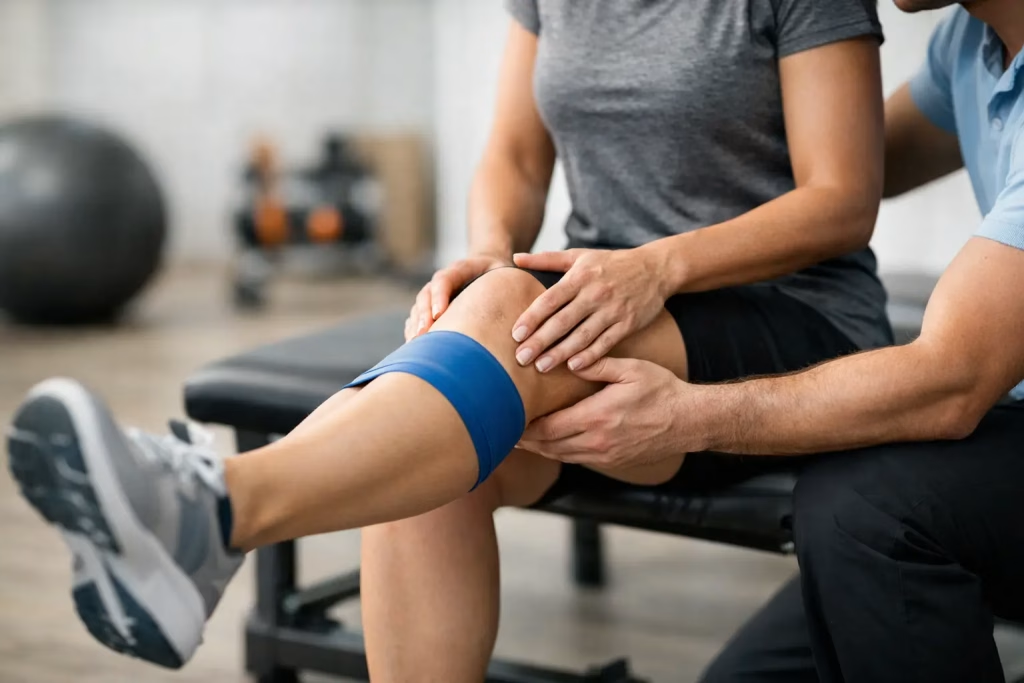
That first trip downstairs after a knee injury can feel far more daunting than it should. You may be walking comfortably on flat ground, yet still hesitate before the garden, a round of golf, getting up from the floor with grandchildren, or returning to the gym. Knowing how to strengthen knees after injury is not about pushing through pain or collecting the hardest exercises. It is about rebuilding trust in your knee, one sensible progression at a time.
For adults over 40, this matters because a knee injury can quickly lead to less movement, weaker leg muscles and more stiffness. The good news is that knees respond well to the right amount of gradual loading. A clear plan can help you move with greater confidence and get back to the activities that make life feel like yours.
Start by knowing what your knee can tolerate
Your knee does not need complete rest forever, but it does need the right dose of activity. Too little movement can leave the thigh, calf and hip muscles weaker. Too much, too soon can keep an irritated knee sore and swollen. The goal is to find the middle ground.
Before beginning strengthening work, consider the nature of the injury. Recovery after a simple twist or mild strain is very different from recovery after a fracture, tendon rupture, knee replacement or ligament surgery. If you have had an operation, follow the restrictions and milestones set by your surgeon and physiotherapist.
For most exercise-related soreness, a useful guide is how the knee responds during the session and over the following 24 hours. Mild discomfort that settles promptly may be acceptable. Sharp pain, a limp that worsens, new swelling, catching, locking or a knee that gives way are signs to reduce the load and seek advice. Do not judge progress by one good day. Look for a gradual trend over several weeks.
How to strengthen knees after injury: build the foundations
The knee is supported by more than the muscles directly above it. Strong quadriceps at the front of the thigh help control bending and straightening. Hamstrings, calves, glutes and the muscles around the hip all contribute to steadier walking, climbing stairs and balance.
Begin with movements you can perform with good control. Slow, steady repetitions are usually more valuable than rushing through a large number of them. Aim for two or three strength sessions each week, leaving a day between harder sessions while your knee adapts.
Restore comfortable movement first
If your knee is stiff, start with gentle range-of-motion work. Seated knee bends and straightens, heel slides on the bed, or easy pedalling on a stationary bike can help the joint move more freely. Keep the movement within a comfortable range at first. Forcing a stiff knee is rarely productive.
Walking can also be useful when it does not increase symptoms. Start with a short, level route and build time before adding hills, uneven ground or speed. A ten-minute walk completed comfortably several times a week is a better starting point than one ambitious hour that leaves your knee swollen.
Strengthen the quadriceps without provoking pain
The quadriceps often lose strength quickly after a knee injury, particularly if you have been avoiding stairs or standing from lower chairs. Begin with a quad set: sit or lie with the leg straight, tighten the front of the thigh and gently press the back of the knee down into the surface. Hold for five to 10 seconds, then relax.
As this becomes easier, try a straight-leg raise. Keep one knee bent, tighten the thigh of the straight leg and lift it slowly only as high as you can without the knee bending or your back arching. If lifting the leg causes pain at the front of the hip or knee, return to quad sets or ask a physiotherapist to check your technique.
Sit-to-stands are one of the most practical next steps. Use a firm chair, place your feet under your knees and stand without using your hands if possible. Sit down slowly. This trains the same strength and control you need for daily life. Start with a higher chair, then gradually lower the height as your ability improves.
Add hip and calf strength for better knee control
A knee that rolls inward during stairs, squats or walking often needs more support from the hips. Side-lying leg lifts, standing side steps and controlled single-leg balance can help build this control. Keep the pelvis level and avoid twisting your body to cheat the movement.
Calf raises deserve attention too. Your calves help absorb force with every step and assist when you climb hills or rise onto your toes. Hold a bench or kitchen counter, lift both heels slowly, pause, then lower with control. Progress from two legs to one leg only when the movement feels steady and your knee remains settled afterwards.
Progress from basic exercises to everyday demands
Once simple movements are comfortable, your knee needs practice with the tasks you actually want to do. This is where many people either stop too early or jump ahead too fast.
Mini squats, low step-ups and split-stance exercises can build strength through a greater range. Start with a shallow squat while holding a stable support. Keep your knee tracking roughly in line with the middle toes and your weight spread through the whole foot. There is no prize for squatting deeply before you are ready.
For step-ups, use a low step and lead with the recovering leg. Focus on a quiet, controlled lift rather than pushing hard off the other foot. When that is easy, increase repetitions first, then height, then add light weight. Change only one variable at a time. This makes it much easier to identify what your knee tolerates.
Balance work becomes increasingly valuable after 40 because it improves your ability to react to a wobble, uneven ground or a missed step. Practise standing on one leg beside a bench or wall. When you can hold this comfortably, try turning your head slowly or reaching one hand forward. Keep safety first – balance training should challenge you, not put you at risk of a fall.
If your goal is returning to tennis, tramping, netball, running or a physically demanding job, strength alone is not enough. You may also need controlled hopping, direction changes, faster stepping and sport-specific drills. These should come later in rehabilitation, when you can walk briskly, manage stairs and perform strength exercises without pain, swelling or poor control.
Avoid the common mistakes that prolong recovery
The most common mistake is treating pain as the only guide. Some discomfort during rehabilitation can be normal, but swelling, instability and a worsening limp matter just as much. Keep a simple note of your activity, symptoms and recovery the next morning. It gives you a much clearer picture than trying to remember how the knee felt last week.
Another mistake is doing exercises only when the knee feels bad. Strength changes come from consistency. A manageable routine done regularly will usually outperform occasional intense sessions. It also helps to keep general fitness going with options that suit your current stage, such as an exercise bike, swimming or upper-body training.
Finally, do not overlook footwear and daily habits. Supportive shoes, sensible pacing and avoiding long periods in one position can make early recovery more comfortable. But these are supports, not replacements for strengthening. The muscles still need a reason to get stronger.
When professional assessment is the smart next step
Get assessed promptly if you cannot bear weight after an injury, have major swelling or deformity, hear a pop followed by instability, or the knee locks and cannot fully straighten. Seek urgent medical help for a hot, red, markedly swollen knee, fever, calf swelling or shortness of breath.
It is also worth seeing a physiotherapist when recovery has stalled, you are unsure which exercises are safe, or your knee feels unreliable despite rest. A one-to-one assessment can identify whether limited movement, weak quadriceps, poor hip control, tendon irritation or another issue is holding you back. The right programme should fit your injury, your current fitness and the life you want to return to – not a generic sheet of exercises.
At Growing Younger Physiotherapy, we help local adults build practical strength for walking, work, sport and independent living. The focus is not simply getting you through an appointment. It is helping you feel confident using your knee again.
Your next step does not need to be dramatic. Choose one movement you can do well, repeat it consistently, and let your knee earn the next challenge. That is how strength and confidence return together.
