
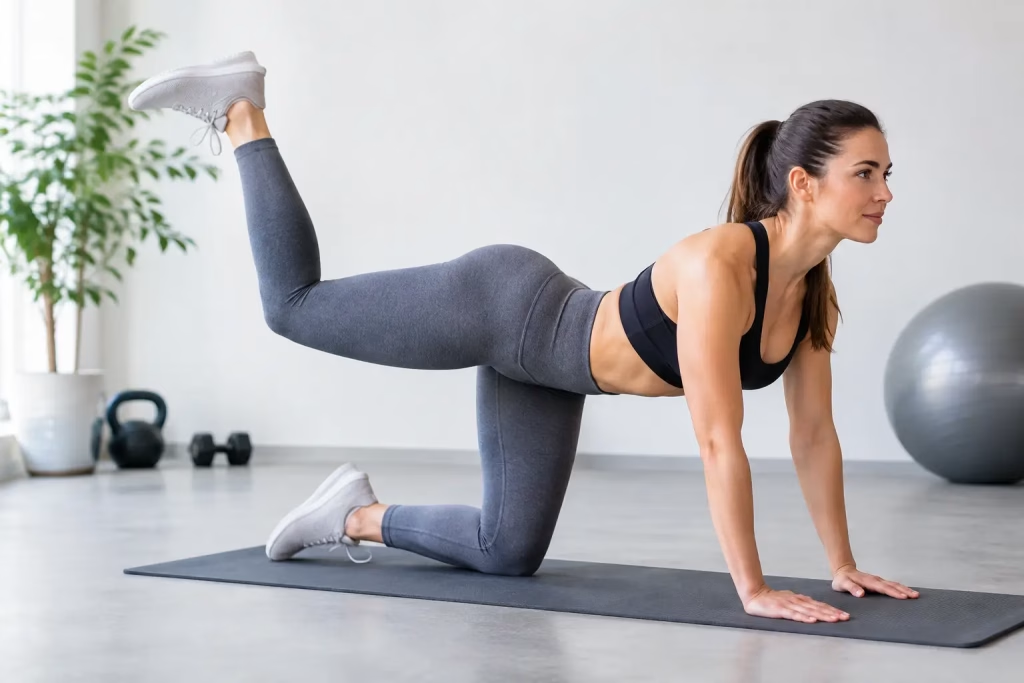
Your glutes should help you rise from a chair, climb stairs, walk briskly and carry the shopping without your lower back or knees doing all the work. When they are not doing their share, everyday movement can start to feel harder than it should. Learning how to strengthen weak glutes is not about building a gym-body look. For most adults over 40, it is about moving with more confidence, staying independent and keeping up with the activities you enjoy.
Your glutes are a group of muscles around the back and side of your hips. The gluteus maximus creates power for standing, climbing and lifting. The smaller side muscles help keep your pelvis steady when you walk, balance on one leg or step off a kerb. When these muscles are weak, poorly coordinated or simply underused, other areas can become overworked.
Why weak glutes can affect more than your hips
Many people notice weak glutes as a vague ache around the hips, a feeling of instability, or legs that tire quickly on hills. Others notice the knock-on effects first: recurring lower-back tightness, sore knees when using stairs, or poor balance when getting dressed standing up.
Weak glutes are not the only cause of these problems. Back pain, hip arthritis, tendon irritation, knee injuries and nerve symptoms can all change the way your body moves. But when your glutes are not contributing well, your lower back, hamstrings and front thigh muscles often try to compensate. That can make simple tasks feel stiff, heavy or uncomfortable.
Sitting for long stretches is one common contributor, particularly for desk workers and drivers. So is stopping regular exercise after an injury or busy period of life. Ageing does not automatically mean weak glutes, but muscle strength and power do decline if they are not challenged. The good news is that they respond well to sensible, progressive training at any age.
How to strengthen weak glutes safely
The best programme is one you can perform with good technique, repeat consistently and gradually make harder. Start with two or three sessions each week, leaving at least a day between harder sessions. A little muscle fatigue is expected. Sharp pain, increasing joint pain or symptoms that linger well into the next day are signs to reduce the range, resistance or repetitions.
Before each session, take five to 10 minutes to walk, cycle gently or move through a few comfortable sit-to-stands. You do not need an elaborate warm-up, but cold, stiff muscles rarely perform their best.
Begin with a supported glute bridge
Lie on your back with your knees bent and feet hip-width apart. Gently tighten your stomach, press through both feet and lift your hips until your body forms a comfortable line from shoulders to knees. Pause for two seconds, then lower slowly.
Keep the movement modest at first. You should feel effort through your buttocks and perhaps the back of your thighs, not a pinch in your lower back. Aim for two sets of eight to 12 repetitions. If hamstrings cramp, bring your heels a little closer to your bottom or lower the height of the lift.
Build everyday strength with sit-to-stands
Sit towards the front of a firm chair with your feet beneath your knees. Lean your chest slightly forwards, press through your feet and stand up without using your hands if you can do so safely. Control the return to the chair rather than dropping back down.
This is one of the most useful glute exercises because it practises a movement you use every day. Start with a chair height that feels manageable. As you improve, slow the lowering phase, hold a weight close to your chest, or use a slightly lower chair. Two or three sets of six to 10 controlled repetitions is a solid starting point.
Train side-hip control with band steps
Place a light resistance band around your thighs, just above the knees, or around your ankles if that feels comfortable. With a small bend in your knees, take slow sideways steps while keeping your toes facing forwards and your pelvis level. Avoid swaying your trunk from side to side.
The smaller glute muscles at the side of your hip are working here. Take six to 10 steps each way, rest, then repeat for two or three rounds. A stronger band is not always better. Choose resistance that lets you keep control rather than twisting or hitching through your back.
Progress to a step-up
Use the bottom step of a staircase or a stable low platform near a rail or bench for support. Place one whole foot on the step, lean forwards slightly and push through that foot to stand tall. Lower slowly, keeping your knee roughly in line with your second toe.
Step-ups develop strength, balance and confidence for stairs and uneven ground. Begin with six to eight repetitions each side. Increase the step height or add light hand weights only once you can complete the movement without knee pain, wobbling or pushing strongly off the trailing foot.
Technique matters, but perfection is not the goal
People are often told to “squeeze your glutes” through every exercise. That cue helps some people, but it can cause others to clench too hard, hold their breath and move stiffly. A better aim is to press through your feet, move slowly enough to stay in control and finish each repetition feeling that your hips have done useful work.
Watch for common compensations. If your ribs flare and your lower back arches during bridges, reduce the lift. If your knees collapse in during sit-to-stands or step-ups, make the task easier and focus on keeping your feet firmly grounded. If one side is clearly less stable, it is reasonable to complete a few additional repetitions on that side, provided pain stays settled.
You do not need to feel sore after every session to get stronger. Mild muscle soreness the next day can happen, especially when starting out, but progress comes from repeated practice and gradual overload, not from exhausting yourself once a week.
Make the exercises progressively harder
Your body adapts when the challenge remains the same for too long. Every one to two weeks, consider changing just one element: add two repetitions, complete another set, use a little more resistance, slow the lowering phase or choose a slightly more demanding variation.
For example, bridges can progress from two legs to a bridge with one foot slightly farther away, then eventually to a single-leg version. Sit-to-stands can progress from a higher chair to a lower chair or light weights. Step-ups can progress through height, control and load. The right progression depends on your current balance, joint health and injury history.
Walking is valuable for general health, but it may not be enough on its own to rebuild lost glute strength. Include purposeful resistance exercises alongside your walks, gardening, golf, swimming or group fitness. If you enjoy the gym, leg presses, supported split squats and cable hip exercises can also work well when fitted to your ability.
When weak glutes need professional assessment
It is worth getting assessed rather than guessing if hip, back or knee pain is stopping you from exercising; you have pain at night; your leg gives way; you have numbness or tingling; or symptoms began after a fall or injury. Sudden weakness, changes in bladder or bowel control, or numbness around the groin need urgent medical attention.
A physiotherapist can check whether your glutes are truly weak, whether pain is inhibiting them, and whether another issue is changing your movement. This matters because the same exercise can be helpful for one person and irritating for another. At Growing Younger Physiotherapy, one-to-one assessment and exercise-based treatment are designed to help local adults return to comfortable, capable movement without being handed a generic programme.
Give your glutes a reason to get stronger
Set a practical goal that means something to you: getting up from the floor to play with grandchildren, walking the waterfront without hip ache, taking the stairs at work, or feeling steadier on your morning walk. Then train towards it two or three times a week, with exercises that are challenging but manageable.
Small, consistent sessions can change how your body feels in daily life. Start where you are, build gradually and let stronger hips support the active life you want to keep living.
