
A diagnosis of osteoporosis can make everyday movement feel risky. You may start avoiding the gym, gardening, lifting the shopping, or even a brisk walk because you are worried about a fracture. But the right exercise is not something to fear. It is one of the most practical ways to support stronger bones, better balance and the confidence to keep living independently. When people ask about the best exercises osteoporosis care should include, the answer is rarely one single movement. It is a well-chosen combination, matched to your bone health, fitness level and any previous injuries.
Why exercise matters for osteoporosis
Bones respond to load. When muscles pull against bone during weight-bearing and resistance exercise, they receive a signal to maintain or build strength. Exercise also improves muscle strength, posture, coordination and reaction time – all vital for reducing the chance of a fall.
That does not mean more impact is always better. If you have osteoporosis, osteopenia, previous fractures, persistent back pain or poor balance, the safest plan depends on your individual risk. A person who has always jogged may be able to continue a modified running programme, while someone with spinal fractures may need a very different starting point.
The goal is not to train like an athlete. It is to stay strong enough to get up from a chair easily, carry what you need, walk confidently, climb stairs and enjoy the activities that make life feel like yours.
The best exercises for osteoporosis work on four areas
A useful osteoporosis exercise programme includes weight-bearing activity, strength training, balance work and posture or mobility exercises. Each plays a different role, and together they offer far more protection than walking alone.
1. Weight-bearing exercise for bone loading
Weight-bearing exercise means your feet and legs support your body weight. This creates healthy loading through the hips, legs and spine, which are common sites of osteoporotic fracture.
Brisk walking is an excellent place to start for many adults over 40. It is accessible, low-cost and easy to build into the week. Walk with enough purpose that you feel warmer and breathe a little harder, while still being able to talk in short sentences. Hills, stairs and varied terrain can increase the challenge once your body is ready.
Other options may include dancing, tennis, stair climbing, hiking or low-impact aerobics. If you have good bone health, strength and balance, carefully progressed impact exercise such as small hops, jogging or jumping may be appropriate. However, impact is not suitable for everyone, particularly after a fragility fracture or where there is severe osteoporosis. A physiotherapist can help you work out what is safe rather than relying on a one-size-fits-all class.
Cycling and swimming are excellent for heart health and joint-friendly fitness, but they are not weight-bearing. Keep them if you enjoy them, but add bone-loading and strength work as well.
2. Strength training to build muscle and support bone
Resistance training is one of the best investments you can make in long-term independence. Strong muscles create greater pull on bone, support your joints and make daily tasks safer. It can be done with body weight, resistance bands, dumbbells, cable machines or household items, depending on your starting point.
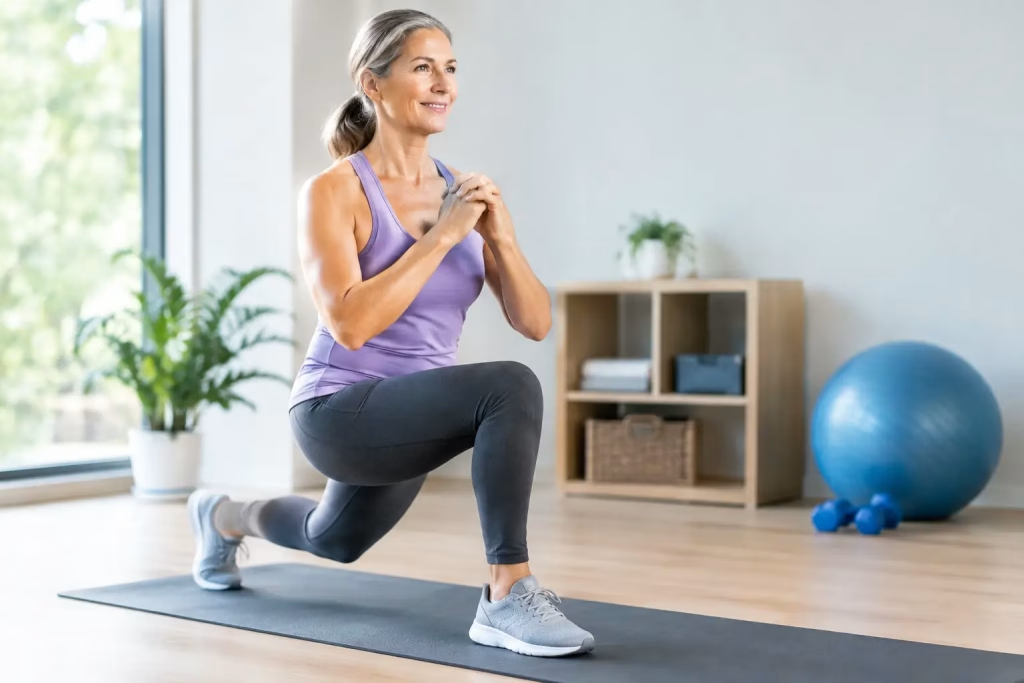
Useful movements often include sit-to-stands or squats, step-ups, calf raises, rowing movements, chest presses, overhead presses and hip-strengthening exercises. The best version is the one you can perform with good technique and enough resistance to feel challenged by the last few repetitions.
For example, a sit-to-stand from a firm chair trains the legs for one of life’s most important movements. If that becomes easy, you can lower the chair height, hold a weight close to your chest, or progress to a controlled squat. Step-ups prepare you for stairs and kerbs. Rows strengthen the upper back, helping you maintain a taller posture rather than drifting into a rounded position.
Two to three strength sessions each week is a sensible target for many people. Leave time for recovery, especially when you are new to training. Light weights that never challenge you may feel safe, but they are less likely to create meaningful change. The answer is not to push through pain or use unsafe form. It is to gradually increase the load under professional guidance.
3. Balance exercises to reduce falls risk
Most fractures happen because of a fall, so improving balance is just as valuable as strengthening bone. Balance work does not need to take an hour. A few focused minutes on most days can make a real difference.
Practise standing with your feet close together near a kitchen bench, then progress to a semi-tandem stance with one foot slightly in front of the other. When comfortable, try tandem standing with one foot directly in front of the other. Single-leg standing is another useful option, provided you have a stable support within reach.
To make balance training more relevant to daily life, include controlled changes of direction, stepping over low obstacles, heel-to-toe walking and stepping up and down. Tai chi can also be a good choice for balance, confidence and body awareness.
Always set up safely. Use a bench, wall or sturdy chair for support, wear secure footwear, and avoid practising on a slippery floor. If you have had recent falls, dizziness, numbness in your feet or feel unsteady when walking, seek an assessment before challenging yourself alone.
4. Posture and spinal strength exercises
Osteoporosis can affect the spine, particularly for people who have had vertebral compression fractures. Exercises that strengthen the muscles of the upper back and encourage a tall posture can help you move more comfortably and confidently.
Gentle upper-back extension exercises, rows, wall presses and shoulder-blade squeezes are commonly helpful. Think about lengthening through the crown of your head, opening the chest and keeping your ribs comfortably stacked over your pelvis. This is not about standing stiffly. It is about giving your spine strong muscular support.
Exercises to approach with care
Having osteoporosis does not mean you should stop moving. It does mean some exercises may need modification, especially if you have spinal osteoporosis, a history of compression fractures or significant rounding through the upper back.
Repeated or loaded forward bending can place extra stress on vulnerable vertebrae. Examples include touching your toes forcefully, deep sit-ups, crunches, or lifting a heavy object with a rounded back. Fast twisting movements, particularly when combined with bending or load, may also be unsuitable.
Instead, learn to hip hinge. Bend through your hips and knees while keeping your back long when picking something up from the floor. Keep loads close to your body and turn your feet rather than twisting sharply through your spine. These small changes can protect your back during everyday jobs as much as during exercise.
The right precautions depend on your scan results, symptoms and fracture history. If an exercise causes sharp pain, new back pain, pain that worsens afterwards, or a sense that something is not right, stop and get it checked.
A practical weekly starting point
For many people, a balanced week could include brisk walking on most days, two or three resistance sessions and short balance practice several times a week. You might walk for 20 to 30 minutes, complete a strength session built around squats or sit-to-stands, step-ups, rows, presses and calf raises, then finish with a few minutes of supported balance practice.
Start below your limit, especially if you have been inactive or are returning after injury. Consistency beats a hard session followed by two weeks of soreness. Gradually add a little more walking time, resistance, repetitions or challenge as your confidence grows.
A bone density scan provides useful information, but it does not tell the whole story. Your previous falls, medications, vision, joint pain, muscle strength and home environment all influence fracture risk. A personalised assessment can identify what is holding you back and create a plan that feels achievable rather than overwhelming.
When to see a physiotherapist
Professional guidance is particularly worthwhile if you have been diagnosed with osteoporosis, have had a low-trauma fracture, notice unexplained height loss, have persistent mid-back pain, or are unsure which gym exercises are safe. A physiotherapist can assess your movement, strength, posture and balance, then teach you how to load your body with confidence.
At Growing Younger Physiotherapy, our one-to-one approach is designed for adults who want clear, practical support to stay active and independent. You do not need to wait until a fall or fracture forces the issue.
Your body is built to move. Start with exercises you can do safely today, progress them steadily, and let every stronger step support the life you want to keep living.
