
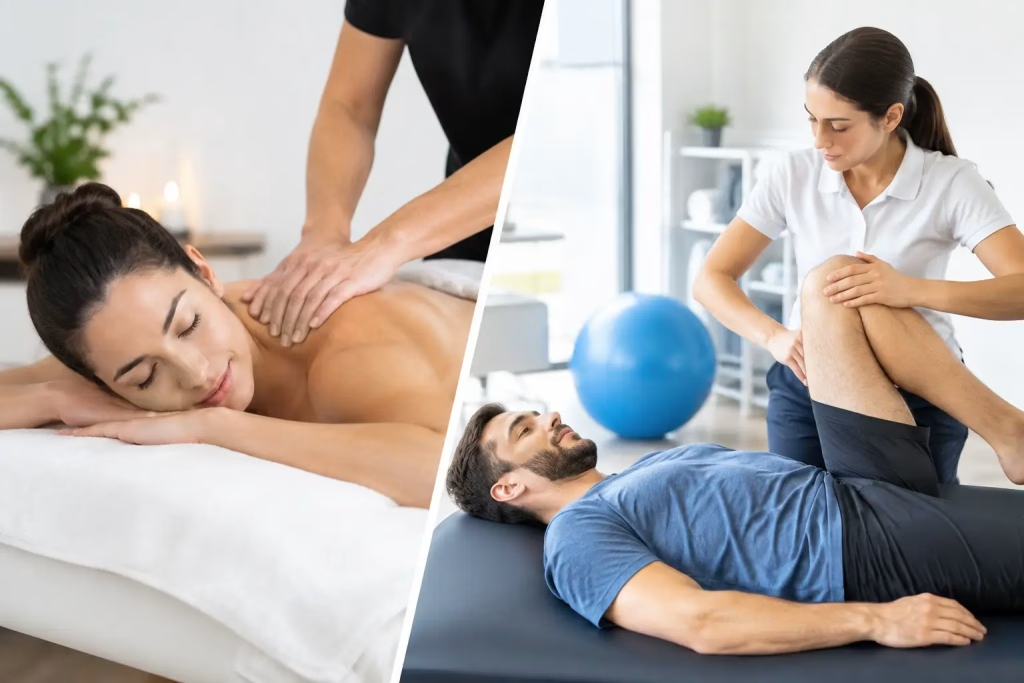
A stiff neck after a long week at the desk is one thing. A shoulder that still hurts when you reach into the top cupboard three months later is another. When people compare massage vs physiotherapy, the right choice usually comes down to one practical question: do you need short-term relief, or do you need to understand and change the reason the problem keeps returning?
Both can be valuable. Both may involve hands-on treatment, and both can help you feel better. But they serve different purposes, particularly when pain is stopping you from walking, gardening, exercising, working, sleeping or keeping up with the family.
Massage vs physiotherapy: the key difference
Massage is primarily used to relax tight or sore soft tissue. A massage therapist may use pressure, kneading and other techniques to ease muscle tension, improve circulation and help you feel more comfortable. For many people, it is an enjoyable way to manage general stiffness, stress and post-exercise soreness.
Physiotherapy begins with a different goal. A physiotherapist assesses how your body is moving, what may be contributing to your pain and what needs to change for you to return to normal activity with more confidence. Treatment may include hands-on techniques, but it also includes education, movement testing, targeted exercise and a clear plan for recovery.
Put simply, massage often focuses on the muscle that feels tight. Physiotherapy looks at why that area may be working too hard in the first place.
For example, recurring calf tightness might be related to doing too much too quickly on your walks. It could also be linked to ankle stiffness, reduced hip strength, footwear, an old injury or how you are loading the leg. Massaging the calf may feel excellent. A physiotherapy assessment can help identify the factors that need attention if you want the tightness to stop dictating your routine.
When massage may be the better choice
Massage can be a sensible option when your main issue is general muscle tension and you are otherwise moving well. Perhaps you have had a demanding few weeks, spent hours driving, returned from a holiday with a sore back, or increased your gym sessions and feel generally tight.
It can also be useful alongside an active lifestyle. A good massage may help you unwind, improve your sense of wellbeing and make it more comfortable to move. Some people enjoy regular massage as part of their self-care routine, much like making time for exercise, sleep and recovery.
The trade-off is that the benefits may be temporary if the cause is not addressed. If the same spot repeatedly knots up after every round of golf, every shift at work or every long walk, the problem may be more than a tight muscle. Continuing to chase relief without changing the driver can become frustrating and expensive.
Massage alone is also unlikely to be enough for a significant injury, marked weakness, loss of movement or pain that has persisted for weeks. It may provide welcome comfort, but comfort is not always the same as recovery.
When physiotherapy is likely to help more
Physiotherapy is usually the stronger choice when pain is ongoing, follows an injury or is affecting what you can do. This includes back pain that flares whenever you bend, knee pain on stairs, a painful shoulder, tennis elbow, hip stiffness, ankle sprains and rehabilitation after surgery.
It is particularly helpful for adults over 40 because bodies change, workloads change and old injuries can start making themselves known again. That does not mean pain is simply something you need to put up with as you get older. It means the solution should account for your current strength, mobility, health history and the activities that matter to you now.
A one-to-one physiotherapy appointment should give you more than a quick treatment table experience. Your physiotherapist should listen to what is happening, examine the painful area and the surrounding joints, and explain the likely reasons in plain language. From there, they can build a realistic plan that may include hands-on treatment, specific exercises, advice on pacing and a gradual return to the activities you enjoy.
That plan matters. If you have stopped playing tennis because your knee hurts, the aim is not merely to have a less painful knee while sitting down. The aim is to build the capacity to move, turn, squat and play without constantly worrying about the next flare-up.
Physiotherapy is not just exercise sheets
Some people avoid physiotherapy because they expect to be handed a generic sheet of exercises and told to get on with it. Good physiotherapy should be far more personal than that.
The exercises need to match your starting point and your goal. Someone recovering from a shoulder injury may need help restoring range and confidence before loading the joint. Someone with long-standing lower back pain may need a plan that builds strength gradually while reducing fear around movement. Someone preparing for a hiking trip may need a different focus again.
Hands-on treatment can still have a place. Massage, joint mobilisation, soft tissue work, dry needling or acupuncture may be used where appropriate to settle symptoms and make movement easier. The difference is that these approaches sit within a bigger strategy, rather than being the whole strategy.
Can you have massage and physiotherapy together?
Yes. In many cases, massage and physiotherapy work well together. Massage can help reduce muscle guarding and make you feel more comfortable, while physiotherapy provides the assessment, progression and strength work needed for longer-term change.
The order depends on your situation. If you are carrying general tension but have no injury, massage may be all you need. If you have pain that keeps returning, start with a physiotherapy assessment so you are not guessing. Your physiotherapist may then recommend massage as part of your management, whether that is through soft tissue work in treatment or alongside your rehabilitation plan.
What matters most is that passive treatment does not replace the work that helps your body become more capable. Relief is useful. Resilience is better.
Signs you should choose physiotherapy first
Consider booking with a physiotherapist before a massage if pain has lasted longer than a couple of weeks, followed a fall or twist, or is limiting your normal movement. The same applies if you notice swelling, instability, weakness, reduced range of motion, repeated flare-ups or pain that wakes you at night.
You should also seek prompt medical assessment for severe or worsening pain, unexplained weight loss, fever, numbness around the groin, changes to bladder or bowel control, major weakness, or pain after significant trauma. These symptoms need more than a massage appointment.
For less urgent problems, early help often prevents a small niggle from becoming the reason you stop exercising altogether. Waiting until you can barely get out of a chair rarely makes recovery easier.
Choosing the right support for your goal
Ask yourself what success looks like. If you want to feel looser after a stressful week, massage may be exactly right. If you want to get through a full workday without back pain, climb stairs comfortably, return to Pilates or keep up with the grandchildren, physiotherapy is more likely to give you a practical path forward.
At Growing Younger Physiotherapy, the focus is on helping people over 40 stay active, mobile and strong through personalised, hands-on care and exercise-based recovery. That means looking beyond the sore spot and working towards the activities that make your life feel like your own.
You do not need to choose between feeling better now and moving better later. Start by being clear about what your body is telling you, then choose the support that helps you get back to doing more of what you enjoy.
