That ache in your shoulder when you reach into a cupboard, the knee that complains on the stairs, or the back stiffness that appears after gardening can leave you asking a practical question: acupuncture or physiotherapy? For adults over 40, the best answer is rarely about choosing the trendiest treatment. It is about finding the approach that helps you move comfortably, rebuild confidence and keep doing the things that matter to you.
Both treatments can have a place in managing pain and recovery. They work differently, however, and one may be more useful than the other depending on what is causing your symptoms, how long they have been present and what you want to get back to doing.
Acupuncture or physiotherapy: what is the difference?
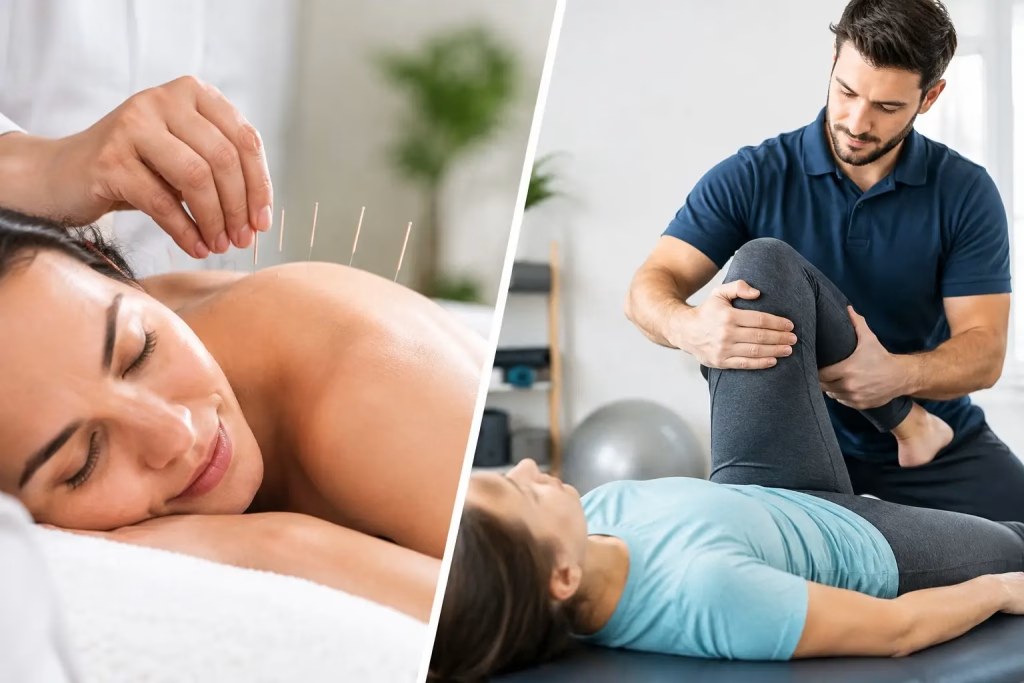
Physiotherapy looks at how your body moves, where it is under strain and what may be keeping a problem going. A physiotherapist assesses your joints, muscles, strength, balance and movement patterns, then creates a plan to improve them. Treatment may include hands-on therapy, targeted exercises, advice about activity and gradual rehabilitation.
The goal is not simply to settle pain for a day or two. It is to help you return to walking, working, golf, gym sessions, caring for grandchildren or getting through a busy week with more comfort and confidence.
Acupuncture involves inserting very fine needles at specific points on the body. In a physiotherapy setting, it may be used to help reduce pain, ease muscle tension and support relaxation. Some people find it particularly helpful when pain has made muscles feel guarded or when stiffness is stopping them from moving normally.
Acupuncture is usually a supportive treatment rather than a complete rehabilitation plan on its own. It can help create a more comfortable window for movement, but lasting improvement often also requires rebuilding strength, mobility and control.
When physiotherapy is usually the stronger starting point
Physiotherapy is often the best first step when pain is linked to an injury, repeated strain, weakness, poor movement control or a change in activity. This includes many common problems such as back pain, knee pain, shoulder injuries, tendon issues, arthritis-related stiffness and recovery after a fall or operation.
A good assessment matters because the place you feel pain is not always the source of the problem. A sore knee, for example, may be affected by hip strength, ankle movement, old injury patterns or a recent jump in walking or exercise. Treating only the painful area can miss the bigger picture.
For people over 40, physiotherapy also provides something especially valuable: a clear way forward. Instead of being told to stop everything you enjoy, you should understand what you can safely keep doing, what needs modifying for now and how to build back up.
Physiotherapy may suit you best if you want to:
- return to a specific activity, work task, sport or exercise routine
- recover from a recent injury or surgery
- improve balance, strength or confidence with movement
- understand why pain keeps returning
- follow a personalised plan rather than rely on short-term symptom relief
This does not mean every session needs to be hard work. Early treatment may focus on calming an irritated area and restoring comfortable movement. As symptoms settle, exercise becomes more specific to the demands of your everyday life.
When acupuncture may be helpful
Acupuncture can be a worthwhile option when pain or muscle tension is making it difficult to move, sleep or begin exercise-based rehabilitation. Some people with persistent neck pain, back pain, shoulder tension or osteoarthritis-related discomfort find it helps reduce symptoms enough to take part more comfortably in their recovery plan.
It may also appeal if you have tried medication and prefer an additional non-drug option. That said, acupuncture is not a guaranteed fix, and responses vary. Some people notice a meaningful change after one or two sessions, while others notice little benefit. An honest clinician should explain this clearly and review whether it is helping rather than continuing a treatment that is not delivering results.
Acupuncture should be provided by a properly trained practitioner using sterile, single-use needles. It is generally well tolerated, although mild bruising, temporary soreness or light-headedness can occur. Tell your clinician if you take blood-thinning medication, have a bleeding disorder, are pregnant or have any medical condition that may affect treatment choices.
Why combining acupuncture and physiotherapy can make sense
For the right person, it is not always acupuncture versus physiotherapy. Combining them can be useful when pain is high and movement is limited.
Imagine you have had lower back pain for several months. Your back muscles feel tight, you are sleeping poorly and even a short walk leaves you cautious. Acupuncture may help settle some pain and muscle guarding. Physiotherapy can then use that opportunity to restore movement, improve strength and gradually rebuild your tolerance for walking, lifting and daily tasks.
The same principle can apply to a stiff shoulder or a painful knee. Passive treatment can help you feel more comfortable, but active rehabilitation is what prepares your body for the load of real life. The aim is not to make you dependent on appointments. It is to give you the tools and confidence to stay active between them.
At Growing Younger Physiotherapy, treatment is one-to-one and built around your own goals, whether that means getting back to a weekly walk, returning to the gym, working in the garden or simply getting up from a chair without worrying about pain.
Questions to ask before deciding
The most useful question is not, “Which treatment is better?” It is, “What is most likely to help with my problem right now?” A thorough assessment should help answer that.
Ask what the clinician thinks is contributing to your symptoms, what progress should look like over the next few weeks and what role you need to play at home. Also ask whether acupuncture is being recommended as a short-term aid, a standalone treatment or part of a wider rehabilitation plan.
Be wary of promises that one treatment will fix every type of pain. Bodies are more complicated than that. Persistent pain can involve joints, muscles, nerves, sleep, stress, activity levels and previous injuries. The best care acknowledges these factors without making the process confusing.
If your pain followed a significant accident, you have severe swelling, a joint that looks deformed, unexplained weight loss, fever, new numbness or weakness, or changes to bladder or bowel control, seek urgent medical advice. These symptoms need prompt assessment rather than routine treatment.
Choose the option that supports your next step
If you are dealing with a clear injury, recurring pain or reduced strength and mobility, physiotherapy is usually the foundation. It identifies what needs attention and gives you a practical route back to the activities you value. Acupuncture may be a helpful addition when pain or tension is making that process harder.
The right plan should feel personal, not generic. You deserve to know why a treatment is being recommended, what it is intended to change and how it will help you stay strong, mobile and independent for the years ahead. Start with a proper assessment, then choose the care that helps you take your next comfortable step with confidence.
