
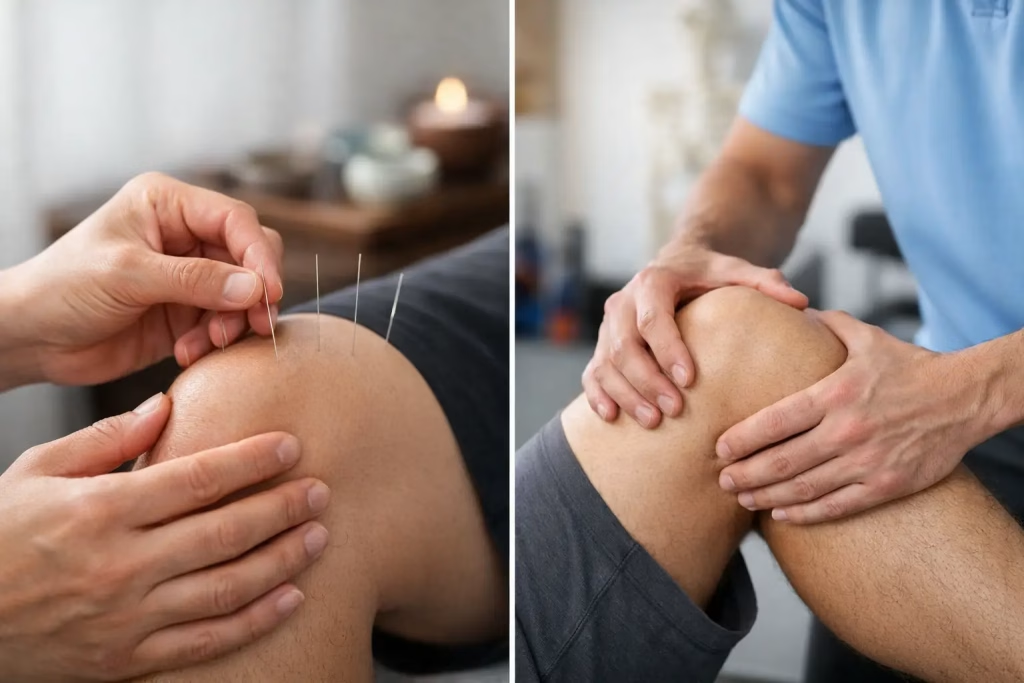
A sore knee rarely stays just a sore knee. It can make stairs feel like a negotiation, shorten your usual walk, stop you getting down to the garden, or leave you worrying that exercise will make things worse. When comparing acupuncture vs physio for knee pain, the most useful question is not simply, “Which one is better?” It is, “What is driving my pain, and what will help me get back to moving with confidence?”
For many adults over 40, the strongest answer is not an either-or choice. Physiotherapy addresses the movement, strength and load issues that often keep knee pain hanging around. Acupuncture may help settle pain enough to make that active recovery more comfortable. The right mix depends on your diagnosis, goals, health history and how your knee responds to treatment.
Acupuncture vs physio for knee pain: the key difference
Physiotherapy is designed to understand why your knee is painful and create a plan to improve how it works. That may include hands-on treatment, tailored exercises, advice about walking or training, and a gradual return to the activities you value. A good physio assessment also looks beyond the knee itself. Hip strength, ankle movement, balance, footwear, previous injuries and day-to-day loading can all matter.
Acupuncture uses very fine needles placed at selected points in the body. In a physiotherapy setting, it is commonly used to help reduce pain, ease muscle tension and support short-term movement. Some people notice their knee feels less stiff or irritable after a session, particularly when pain has made them guard the leg or avoid movement.
In simple terms, physio aims to change the factors that are contributing to the problem. Acupuncture can be a useful tool for managing symptoms while that change is happening.
When physiotherapy is usually the better starting point
If your goal is to walk further, feel steadier on stairs, return to golf, get back to the gym, or keep up with grandchildren, physiotherapy is usually the foundation of your recovery. Knee pain often improves when the joint is loaded in a gradual, sensible way rather than completely rested.
This is particularly true for common problems such as knee osteoarthritis, pain around the kneecap, tendon pain, recovering after a twist or fall, and weakness following a period of inactivity. Your treatment should not be a sheet of generic exercises handed over after a quick chat. It should be based on what you can currently do, what aggravates your symptoms and what you need your knee to do in real life.
For example, someone whose knee hurts after sitting at a desk all day may need a different plan from someone who gets pain on hills or after weekend sport. One may need to build tolerance for repeated bending and standing. The other may need better strength and control through the hips and thighs, alongside changes to training load.
Physio is also valuable because it gives you clear guidance on pain. A little discomfort during rehabilitation is not always harmful, but sharp pain, swelling that lingers, or a steady decline in function needs a different approach. Knowing the difference can stop fear from shrinking your world.
What a good physio plan should include
A personalised plan usually combines assessment, treatment and progression. Early sessions may focus on settling an irritated knee and finding movements you can do comfortably. As confidence improves, the focus shifts towards building strength, mobility, balance and capacity for everyday tasks.
The exercise does not need to be complicated to be effective. Sit-to-stands, step-ups, cycling, walking progressions and targeted leg-strength work can all have a place when chosen and progressed properly. Consistency beats an occasional heroic workout.
Where acupuncture can help with knee pain
Acupuncture may be worth considering when pain is making it hard to begin or continue rehabilitation. If your knee is very sensitive, your surrounding muscles are tight, or you are sleeping poorly because of discomfort, pain relief can make it easier to move and exercise.
Research suggests acupuncture can provide short-term pain relief for some people with knee osteoarthritis and other persistent musculoskeletal pain. Results vary. Some people feel a meaningful change after a few treatments; others feel little or no benefit. It is not a cure for arthritis, a meniscus injury or a tendon problem, and it cannot replace the strength and movement work needed for lasting function.
That does not make it a poor option. It makes it a tool that needs to be used for the right job. If acupuncture helps you get through a painful flare, walk more normally or complete your prescribed exercises, it may add genuine value to your overall plan.
At Growing Younger Physiotherapy, acupuncture can be integrated into one-to-one care where it is clinically appropriate, rather than offered as a stand-alone promise of a quick fix. The aim remains the same: helping you move well enough to stay active, independent and involved in the life you enjoy.
Is acupuncture safe?
When performed by a properly trained clinician using sterile, single-use needles, acupuncture is generally considered safe. Mild bruising, temporary soreness, light bleeding or feeling tired afterwards can occur. Most reactions are minor, but acupuncture is not suitable for everyone without extra care.
Tell your clinician if you take blood-thinning medication, have a bleeding disorder, are pregnant, have a needle phobia, have a pacemaker or have significant health conditions. A thorough conversation before treatment matters. You should always know why acupuncture is being suggested, what it is expected to help with and what the alternative options are.
The trade-off: passive relief versus active progress
The biggest trap with any knee treatment is relying only on something done to you. Massage, acupuncture, medication and hands-on therapy can all reduce symptoms. But if you never rebuild the leg’s ability to cope with stairs, walking, squatting, carrying shopping or sport, the pain may return as soon as life gets busier again.
On the other hand, pushing through a painful exercise programme without support is not the answer either. A knee that is swollen, unstable or highly irritable may need symptoms calmed before it is ready for more loading. This is where combining acupuncture with physiotherapy can make sense.
Think of acupuncture as potentially turning down the volume on pain. Physiotherapy helps you use that quieter period to build the strength, confidence and movement habits that protect your independence over the long term.
How to choose the right approach for your knee
Start with a proper assessment if pain has lasted more than a couple of weeks, keeps returning, or is limiting your normal routine. The best plan will be based on your specific knee, not on what helped a friend or what was trending online.
Physiotherapy alone may suit you if your symptoms are manageable and you are ready to follow an exercise-based recovery plan. Adding acupuncture may suit you if pain, muscle guarding or poor sleep is stopping you from progressing, or if you have previously found it helpful as part of a broader approach.
Your preferences count too. Some people strongly dislike needles, while others value the immediate sense of relief acupuncture can provide. A clinician should respect that preference while being honest about expected outcomes. Treatment should feel like a clear plan, not an open-ended series of appointments with no measurable goal.
For ACC-related knee injuries, a physiotherapist can assess you without a GP referral and help determine the appropriate pathway for care. If your injury meets the criteria for a rehabilitation scheme, further support may also be available. The practical details are worth discussing early, so you can focus on recovering rather than putting off treatment.
When knee pain needs medical attention first
Do not rely on acupuncture or exercise alone if you cannot bear weight after an injury, your knee is badly swollen or visibly deformed, it repeatedly locks or gives way, or you have fever, redness and heat around the joint. Sudden calf swelling, chest pain or shortness of breath also need urgent medical assessment.
Persistent night pain, unexplained weight loss or pain that is worsening despite sensible care should be checked by a health professional. Most knee pain is manageable, but the right diagnosis protects you from missing something that needs different treatment.
The most helpful treatment is the one that gets you safely back to the things that matter – whether that is a comfortable walk around the neighbourhood, a full day at work, getting on the floor with the grandkids, or returning to the sport you thought you had to give up.
