That familiar hesitation before getting up from the floor, taking the stairs or joining a weekend walk is not a sign you should stop exercising. It is often a sign your body needs the right kind of movement. The best low impact workouts help adults over 40 improve fitness, strength and confidence without repeatedly pounding already sore knees, hips, backs or feet.
Low impact exercise is not about taking it easy or settling for less. Done well, it can raise your heart rate, challenge your muscles and make everyday activities feel noticeably easier. The key is choosing exercise that matches your current ability, injury history and goals, then progressing it steadily.
What makes the best low impact workouts work?
Low impact means at least one foot stays in contact with the ground, or your body weight is supported by equipment such as a bike, pool or rowing machine. There is less landing force than running, jumping or court sports, but that does not automatically make every low impact option right for every person.
A brisk hill walk may irritate an arthritic knee. Swimming can be excellent for some shoulders but uncomfortable for others. Cycling is kind to many joints, yet the bent position may not suit someone with certain hip or back symptoms. The best choice depends on where you are starting, what you enjoy and which movements your body tolerates well.
For lasting results, aim for a mix of cardiovascular fitness, strength, balance and mobility. Cardio helps with stamina for walking, travel and active weekends. Strength protects your joints by improving the support around them. Balance and mobility make it easier to move confidently when life is less predictable, such as stepping off a kerb while carrying shopping.
10 best low impact workouts for adults over 40
1. Brisk walking
Walking is simple, accessible and more effective than many people give it credit for. A purposeful pace that makes breathing heavier, while still allowing a short conversation, builds heart fitness and leg endurance. Start on flatter ground if your knees or Achilles tendons are sensitive, then add gentle inclines, pace changes or longer routes as your capacity improves.
2. Stationary cycling
An exercise bike allows you to build fitness without the impact of running. It is particularly useful when a sore knee or ankle makes walking distances difficult. Set the seat high enough that your knee has a slight bend at the bottom of each pedal turn, rather than remaining deeply bent. Begin with steady rides before experimenting with short, controlled bursts of higher resistance.
3. Swimming
Water supports body weight, which can make exercise feel more comfortable when joints are painful or stiff. Swimming works the whole body and can be an enjoyable option for people who dislike gyms. Choose a stroke that feels comfortable: breaststroke may aggravate some knees, while freestyle may challenge an irritable shoulder. There is no prize for using a stroke that hurts.
4. Water walking or aqua fitness
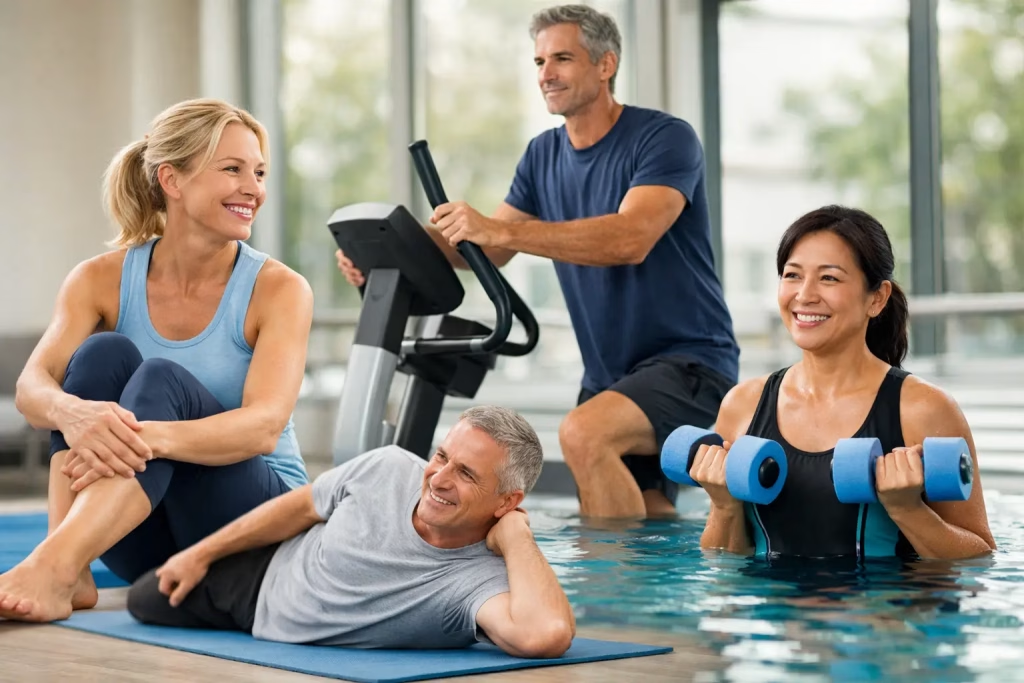
For people returning to activity after a flare-up, water walking and aqua classes can be a practical first step. The water reduces load while providing resistance in every direction. You can walk forwards, backwards and sideways, perform controlled leg movements, or use foam dumbbells for upper-body work. It is a genuine workout, especially when performed with purpose.
5. Rowing machine workouts
Rowing combines cardiovascular exercise with work for the legs, back and arms. It is low impact, but technique matters. Drive first through the legs, then lean back slightly and finish with the arms. Avoid rounding through your lower back or trying to create power by pulling hard with your arms alone. If you have ongoing back pain, get guidance before making rowing a regular habit.
6. Elliptical trainer sessions
An elliptical trainer provides a smooth stepping pattern without the repeated impact of jogging. It can be a useful bridge for someone who enjoys the feeling of running but is not currently tolerating it. Keep the resistance manageable enough to maintain good posture. If it causes hip pinching, knee pain or numb feet, switch to another option rather than forcing your way through.
7. Pilates-based strength and control
Pilates-style exercise can improve trunk control, hip strength, mobility and body awareness. It is particularly helpful for people who feel stiff, unsteady or disconnected from their movement after time away from exercise. Look for sessions that include progressive strengthening, not only gentle stretching. Better control is valuable, but your muscles also need enough challenge to become stronger.
8. Yoga with sensible modifications
Yoga can improve flexibility, balance and confidence getting up and down from the floor. It can also be demanding, depending on the class. Choose a beginner-friendly or slower class, use blocks or a chair when needed, and avoid pushing into sharp pain. Deep knee bends, long holds and weight-bearing positions through the hands are not compulsory if they do not suit your body.
9. Resistance training
Strength training is one of the most valuable low impact workouts for healthy ageing. Squats to a chair, step-ups, rows, presses, hip hinges and carries can build the strength needed for stairs, lifting, gardening and maintaining independence. Start with body weight, resistance bands or manageable dumbbells, and focus on controlled repetitions. A challenging set should feel like work, not like joint pain.
10. Tai chi
Tai chi uses slow, deliberate movements that develop balance, coordination and lower-body control. It may look gentle, but staying stable while shifting weight from one leg to the other requires focus and strength. It is a good fit if you want an activity that calms the mind as well as trains movement, particularly if balance confidence has declined.
How to choose a workout you will actually continue
The most effective programme is not the one that looks impressive on paper. It is the one you can repeat consistently without dread, excessive soreness or a cycle of pain that keeps interrupting progress. Choose one cardiovascular option and one strength-focused option to begin with. For example, you might walk or cycle three times a week and complete two short strength sessions.
Start below your maximum. Finishing a session feeling as though you could have done a little more is often smarter than pushing until you are wiped out for three days. Increase only one variable at a time: a few more minutes, a little more resistance, an extra set or a slightly faster pace.
Pay attention to how you feel later that day and the following morning. Mild muscle fatigue is normal when starting something new. Sharp pain, increasing joint swelling, limping, pain that wakes you at night, or symptoms that remain worse for more than a day are signs to reduce the load and seek professional advice.
When pain or an old injury is holding you back
Pain can make exercise choices feel confusing. You may worry that movement will make the problem worse, then lose strength and confidence by avoiding activity altogether. In many cases, the answer is not complete rest but the right dose of the right movement, progressed at a pace your body can manage.
A physiotherapist can assess how you move, identify which exercises are likely to help and give you clear boundaries around what is safe to work through. At Growing Younger Physiotherapy, this means one-on-one support built around your goals, whether that is returning to golf, keeping up with grandchildren or simply walking without worrying about your knee.
Your body does not need punishing workouts to stay capable. Give it regular movement that feels achievable, challenge it gradually, and let each stronger step make the next part of life easier.
