That nagging calf that tightens on your morning walk, the shoulder that complains every time you reach into the cupboard, the lower back that stiffens after half an hour in the car – muscle pain has a way of shrinking your world. For many adults over 40, acupuncture for muscle pain is worth considering when rest, stretching, and massage have only helped a little or the pain keeps returning.
The key question is not whether acupuncture is a miracle fix. It is whether it can reduce pain enough, and calm irritated muscles enough, to help you move better and get back to the things that matter. In many cases, the answer is yes – but it works best when it is part of a proper treatment plan, not treated as a stand-alone shortcut.
How acupuncture for muscle pain may help
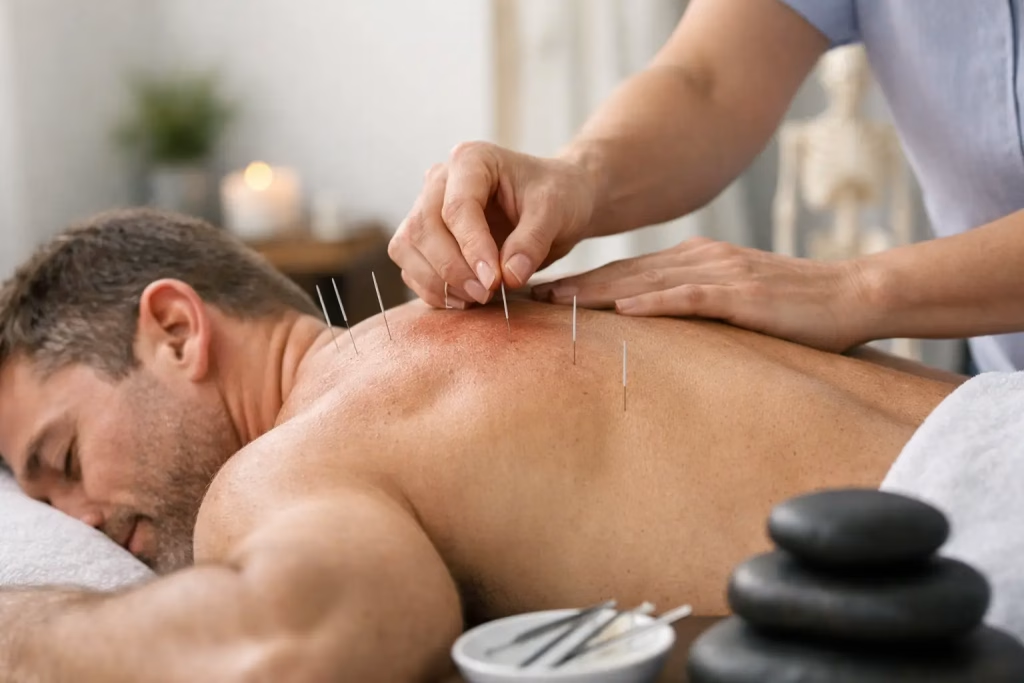
Acupuncture is commonly used to ease muscular tension, reduce pain, and support recovery. Fine needles are placed into specific points in the body, often around the painful area and sometimes in related areas that affect how the muscle is behaving. Most people are surprised by how gentle it feels. You may notice a small prick, a dull ache, warmth, or a twitch in the muscle, but it is usually very manageable.
From a practical point of view, the goal is simple. If a muscle is tight, overworked, or guarding because of pain, acupuncture may help settle it down. Some people feel relief during the session. Others notice they move more freely later that day or the next morning. That can create a useful window to start the exercise and hands-on treatment that produce longer-lasting change.
This matters because muscle pain is not always just a muscle problem. A tight neck may be linked to posture, stress, shoulder weakness, or time spent at a desk. A sore hamstring may really be part of a hip or lower back issue. Acupuncture can help with symptom relief, but the best results usually come when the real driver of the pain is identified as well.
When acupuncture is most useful
Acupuncture can be helpful for a range of muscle-related problems. It is often used for neck pain, shoulder tightness, lower back pain, glute pain, calf tightness, and muscular pain around the knees or hips. It can also be useful after a strain, during rehab, or when muscles stay tense long after the original injury should have settled.
For adults over 40, one of the biggest benefits is that acupuncture may make movement feel less guarded. When pain has been present for weeks or months, people often stop loading the area properly. They avoid turning, bending, lifting, or walking normally. That protective pattern can keep the pain going. If acupuncture reduces the pain enough to let you move with more confidence, it can become a very practical part of recovery.
It may also suit people who want a drug-free option or who are looking for extra help alongside physiotherapy. That said, it is not ideal for every situation. If your pain is coming from a complete tear, a significant joint injury, a fracture, or a condition that needs medical investigation, needles alone will not solve the problem.
Acute pain versus persistent pain
Acute muscle pain and persistent muscle pain do not behave the same way. A recent strain from gardening or lifting may respond quite quickly, especially if treatment starts early and the injury is not severe. Persistent pain can be more complicated. The muscle may be tight, but there may also be reduced strength, poor movement habits, joint stiffness, or an irritated nervous system in the background.
That is why timeframes vary. Some people feel a clear difference after one or two sessions. Others need a series of treatments combined with exercise and load management. If anyone promises the same result for every person, be cautious.
What a session usually feels like
A lot of people are interested in acupuncture but hold back because they do not like needles. That is understandable. The needles used in acupuncture are very fine, and the experience is very different from an injection or blood test.
During treatment, you may be asked to lie or sit in a comfortable position while the clinician places needles in selected points. The area may feel heavy, warm, tingling, or briefly achy. Sometimes a tight muscle will twitch and then soften. After a session, it is common to feel looser, more relaxed, or pleasantly tired.
There can be mild side effects, such as temporary soreness, light bruising, or feeling a bit washed out afterwards. Most are short-lived. A good clinician will explain what to expect, check whether acupuncture is suitable for you, and tailor the treatment to your comfort level.
Why acupuncture works better with physiotherapy
Here is where many people waste time. They chase pain relief without fixing the reason the pain keeps returning. Acupuncture can calm pain, but if your shoulder is weak, your hips are stiff, or your lower back is not tolerating load well, those issues still need attention.
That is why a combined approach often works best. Acupuncture may reduce pain and muscle guarding. Hands-on physiotherapy can improve joint and soft tissue movement. Targeted exercise can rebuild strength and control so the area holds up better in daily life. Together, those pieces give you a better chance of lasting change.
For example, if your upper back and neck are constantly tight from desk work, acupuncture may ease the tension. But if your thoracic spine is stiff and your shoulder blade muscles are weak, the tension may come straight back. Treat the symptom and the cause, and the result is usually stronger.
This is especially relevant for busy adults who do not want endless appointments. You want treatment that helps now and also gives the body a reason to stay better.
Is acupuncture safe for adults over 40?
For most people, acupuncture is safe when performed by a properly trained clinician. Your health history still matters. If you are on blood-thinning medication, have certain medical conditions, are pregnant, or have concerns about skin reactions or dizziness, those details should be discussed before treatment.
Adults over 40 are often dealing with more than one issue at once. You might have shoulder pain and neck stiffness, or calf tightness plus hip weakness, or back pain that flares when you increase your walking. A thorough assessment is important because it helps sort out whether acupuncture is likely to help, where it fits, and what else should be part of the plan.
What results should you realistically expect?
Reasonable expectations matter. Acupuncture may reduce pain, improve muscle relaxation, and help you move with less discomfort. It may not fully resolve a problem if that problem is being driven by poor loading, weakness, joint dysfunction, or an untreated injury.
A good result might mean your shoulder no longer wakes you at night, your back loosens enough that you can drive comfortably again, or your calf settles so you can get back to regular walks. Those changes are meaningful because they help restore independence and confidence.
If there is no change after a sensible trial, the treatment plan should be reassessed. Good care is not about doing more of the same for the sake of it. It is about working out what is helping and adjusting quickly when something is not.
When to seek help for muscle pain
If muscle pain is severe, keeps returning, stops you sleeping, limits your walking or lifting, or has not improved after a couple of weeks, it is worth having it properly assessed. The same applies if you are noticing weakness, numbness, unexplained swelling, or pain that does not behave like a simple strain.
At Growing Younger Physiotherapy, acupuncture is used as part of a one-to-one, evidence-based approach for adults who want to stay active, mobile, and strong. The aim is not to keep you dependent on treatment. It is to help you settle pain, move better, and get back to doing what you enjoy with confidence.
The bottom line on acupuncture for muscle pain
Acupuncture is not magic, but it can be genuinely useful. For the right person, at the right time, it may ease pain, reduce muscle tension, and make it easier to move and exercise again. That can be the turning point between simply coping and actually recovering.
If your muscles keep tightening, your pain keeps returning, or your movement is getting smaller because you are worried about flaring things up, the smartest next step is not guessing. It is getting clear on what is causing the problem and choosing treatment that helps you stay active for the long run.
