
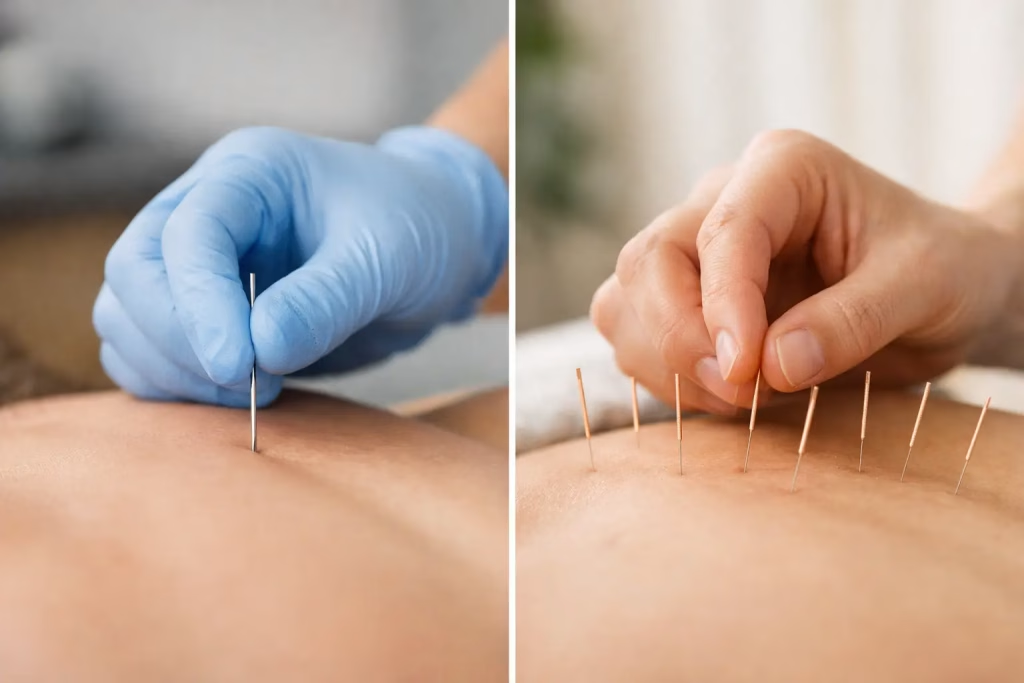
If you have been told to try needles for pain relief, the first question is usually simple – are dry needling and acupuncture actually the same thing? They can look similar from the outside, but dry needling vs acupuncture is not just a matter of different labels. The reason for treatment, the assessment behind it, and the way your clinician chooses the points can be quite different.
For many adults over 40, this matters more than it might for a younger person with a short-term niggle. When pain has been hanging around for months, the shoulder has stiffened up, the back keeps flaring, or the knee never quite settled after an injury, you want treatment that is matched to the real problem. Not a generic approach. Not something done just because it is popular.
Dry needling vs acupuncture: the main difference
The clearest difference is intent. Dry needling is usually used by physiotherapists and other musculoskeletal clinicians to target tight or sensitive muscle bands, trigger points, and movement-related pain. It is generally part of a broader physical assessment that looks at strength, joint movement, posture, loading and function.
Acupuncture has a much longer traditional history and is based on a different clinical framework. In modern healthcare settings, it may also be used for pain relief, muscle tension and general wellbeing, but the reasoning behind where needles are placed can differ depending on whether the practitioner is using traditional acupuncture principles, western medical acupuncture, or a combination.
In practical terms, both can be used to help reduce pain and muscle guarding. Both use very fine needles. Both may leave you feeling looser or more comfortable afterwards. But they are not interchangeable in every case, and the best choice depends on what is driving your symptoms.
How dry needling works
Dry needling is usually aimed at irritated or overactive muscle tissue. A physio may use it when a muscle is staying tight, tender or protective, especially after injury or long periods of overload. Common examples include neck tension from desk work, calf tightness, glute pain, tennis elbow, or back muscles that never seem to switch off.
The goal is not just to put a needle into a sore area. The goal is to change what that muscle is doing. Sometimes that means easing a trigger point. Sometimes it means reducing pain enough for you to move better. Sometimes it creates a short window where exercise, stretching or hands-on treatment works more effectively.
That last point is important. In physiotherapy, dry needling is rarely the whole treatment plan. If your shoulder is weak, your knee is not tracking well, or your lower back pain keeps returning because your loading capacity is poor, the needle may help settle the pain but it will not rebuild strength or restore confidence on its own.
How acupuncture works
Acupuncture can be used for musculoskeletal pain as well, but it is not always focused only on a local tight muscle. Depending on the style used, treatment points may be selected based on a broader pattern of symptoms rather than just the exact spot that hurts.
Some people respond very well to this, especially when pain is wrapped up with stress, poor sleep, tension and a general sense that the body is not coping well. For others, the benefit is more straightforward – pain settles, movement improves, and the area feels less aggravated.
At a clinic level, acupuncture can sit comfortably alongside physiotherapy when it is used thoughtfully. It may help calm pain, reduce muscle tension and support recovery, especially when combined with the right exercise plan and one-to-one care.
Does one work better than the other?
This is where the honest answer is: it depends.
If your main issue is a muscular pain pattern that is easy to reproduce with movement or pressure, dry needling may be the more direct fit. If your symptoms are broader, more persistent, or tied into stress, sleep or whole-body tension, acupuncture may be more helpful. And in some cases, either could be a reasonable option.
What matters most is not which treatment sounds better on paper. It is whether the clinician has identified the real source of your problem and whether the needling is part of a plan that actually moves you forward.
For example, if you have had shoulder pain for six months and cannot reach overhead comfortably, temporary pain relief is useful – but only if it helps you get back into the exercises and movement work that restore proper function. The same goes for knee pain, sciatica-type symptoms, tennis elbow or a stiff lower back. Good treatment is not just about reducing symptoms for a day or two. It is about helping you stay active and independent.
What does it feel like?
Both dry needling and acupuncture use fine needles, and most people find them more comfortable than expected. That said, the sensation is not always identical.
With dry needling, you may feel a brief ache, a muscle twitch, or a heavier sensation in the targeted area. Some people feel immediate release. Others feel a bit sore later that day, much like after a strong massage or a new gym session.
With acupuncture, sensations can be milder or more diffuse. You might feel warmth, tingling, heaviness or deep relaxation. Some people leave feeling calmer overall, not just less sore in one body part.
Neither treatment should feel alarming or uncontrolled. A good clinician will explain what they are doing, check your comfort, and adjust the approach based on how you respond.
Are there risks or reasons to be cautious?
Both approaches are generally considered safe when performed by a properly trained practitioner using appropriate hygiene and clinical judgement. Even so, they are not suitable for everyone in every situation.
If you are needle-phobic, on certain medications, have particular medical conditions, or are dealing with unexplained symptoms that have not been assessed properly, the conversation needs to happen first. Bruising, short-term soreness and temporary symptom flare-ups can occur. Usually these are mild and settle quickly, but they should still be part of an upfront discussion.
This is especially important for adults over 40 who may be managing more than one issue at once. A sore shoulder might not just be a shoulder. It could be linked to neck stiffness, poor thoracic mobility, deconditioning after illness, or a long-standing movement habit. That is why assessment comes before treatment.
Why the assessment matters more than the needles
People often compare dry needling and acupuncture as though the needle itself is the whole story. In real practice, the needle is just one tool.
The bigger question is what happens before and after. Was your problem assessed properly? Were red flags ruled out? Was the treatment chosen for your body, your goals and your stage of recovery? And are you being given a clear plan to build on any pain relief you get?
That is where a physiotherapy setting can be especially useful for musculoskeletal injuries. If you are recovering from an ACC-related injury, trying to avoid a setback, or simply wanting to stay mobile enough to work, garden, travelling or look after grandkids, the aim is not passive care for its own sake. The aim is progress you can feel in real life.
At Growing Younger Physiotherapy, that often means using needling only when it genuinely supports the bigger outcome – less pain, better movement, more confidence, and a stronger return to activity.
Which option may suit you best?
If your pain feels muscular, movement-related and tied to specific tight or tender areas, dry needling may be the more targeted option. If your symptoms are more widespread or you are looking for a broader calming effect alongside pain relief, acupuncture may be worth considering.
But if you are choosing between them without a proper assessment, you are guessing. And guessing is frustrating when you have already spent weeks or months trying to get on top of pain.
A better starting point is to ask what your body needs right now. Does it need local muscle release? Does it need the nervous system settled? Does it need strength and rehab more than another passive treatment? In many cases, the best answer is a combination of strategies rather than a single technique.
The right treatment should help you move forward, not keep you stuck chasing short-term relief. If needling helps reduce pain enough for you to walk more freely, lift your arm, get back to exercise or sleep without constant discomfort, that is useful. If it is being repeated without any clear change in function, the plan probably needs a rethink.
Pain relief matters. So does staying strong enough to keep living your life. The best choice is the one that supports both.
