
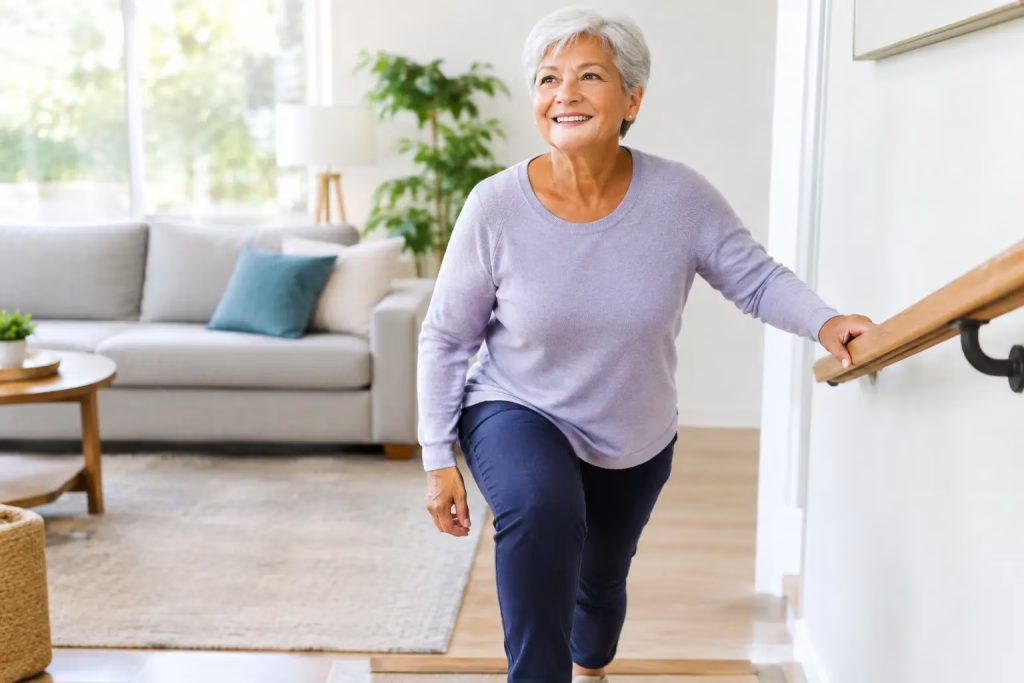
A fall can change far more than a sore wrist or bruised hip. It can make everyday things – walking the dog, carrying washing, gardening or heading out to meet friends – feel uncertain. The good news is that fall prevention at home is not about wrapping yourself in cotton wool. It is about making a few smart changes that help you stay steady, strong and confidently independent.
For many adults over 40, falls are not caused by one dramatic problem. They happen when several small factors line up: a loose mat, poor lighting, stiff joints, weaker leg muscles, new medication, tiredness or rushing to answer the phone. Addressing those factors early can make a real difference.
Start with the places where falls happen most
Your home should support your movement, not test your balance. Take a slow walk through it at the time of day you are most likely to be tired, such as early morning or after dinner. Notice where you need to turn quickly, step over something, carry an item or move between light and dark areas.
Hallways, bathrooms, stairs and bedrooms deserve particular attention. Keep walkways clear of bags, cords, laundry baskets and low furniture. If you have a pet who likes to settle under your feet, make a habit of checking where they are before standing up or changing direction.
Loose rugs can be a common culprit. You do not need to remove every rug if it is firmly secured with non-slip backing and has flat edges, but any rug that slides, curls or bunches up is not worth the risk. The same applies to worn carpet edges and slippery floor mats.
Lighting matters more than most people realise. A dim hallway can turn a familiar route into a hazard, especially when your eyes are still adjusting after waking. Make sure light switches are easy to reach at doorways, consider sensor lights in key areas, and keep a lamp or torch within reach of the bed. Night-time trips to the bathroom should not involve navigating a dark room by memory.
Make the bathroom safer without making it clinical
Bathrooms combine hard surfaces, water and awkward movements, which is why they are one of the first places to review. A non-slip mat inside and outside the shower is a straightforward start, provided it lies flat and is cleaned regularly so soap residue does not build up.
Grab rails can be useful near the shower, bath and toilet, but placement is crucial. A rail fitted at the right height and into a solid wall provides support. A suction-style rail may be suitable for very light assistance in some situations, but it should never be treated as a reliable weight-bearing handle.
If stepping over the side of the bath feels unstable, a shower chair or bath board may help. The right choice depends on your balance, leg strength, bathroom layout and how much help you need. It is worth getting individual advice rather than buying equipment that ends up unused in the cupboard.
Build the strength that keeps you upright
Home adjustments reduce hazards, but they cannot replace the ability to recover when you trip, turn or step on uneven ground. Strong legs, hips and trunk muscles give you a better chance of catching yourself before a wobble becomes a fall.
This does not require punishing workouts. Regular movement is usually more valuable than doing too much once and then stopping for weeks. Sit-to-stands from a sturdy chair, controlled heel raises while holding a bench, step-ups on a low secure step, and supported single-leg standing can all be useful exercises when they suit your current ability.
The key is appropriate challenge. If an exercise feels effortless, it may not be doing enough to improve strength. If it causes sharp pain, significant dizziness or makes you feel unsafe, stop and get guidance. Knee arthritis, back pain, a recent injury or joint replacement can change which exercises are appropriate and how they should be progressed.
Walking is excellent for general health, but walking alone does not always maintain the leg strength and balance needed to prevent falls. A balanced routine includes purposeful strength work and balance practice at least a few times each week. Think of it as maintaining the physical capacity to get up from the floor, climb stairs, carry groceries and react quickly when life gets uneven.
Practise balance in a safe place
Balance is specific. You get better at it by practising it, not merely hoping it stays the same. Start beside a kitchen bench or sturdy table, with one hand close enough to hold if needed. Try standing with your feet closer together, placing one foot slightly in front of the other, or gently turning your head while standing tall.
Avoid practising balance beside a rolling chair, a glass table or anywhere you could fall onto a hard edge. The aim is to challenge yourself safely, not to prove a point. If you have had a recent fall, feel unsteady when turning, or need to grab furniture as you walk through the house, a personalised physiotherapy assessment is a safer starting point.
Check the less obvious contributors
A fall is sometimes the first visible sign of another issue. Changes in vision can make depth, steps and kerbs harder to judge. Foot pain can alter the way you walk. Dizziness may be related to an inner-ear problem, blood pressure changes, dehydration or medication effects. New bifocal or multifocal glasses can also make stairs feel different until you adjust.
Reviewing medications with your GP or pharmacist can be particularly helpful if you have noticed drowsiness, light-headedness or unsteadiness. Do not stop prescribed medication on your own, but do mention any falls, near-falls or fear of falling. Those details help your health team identify patterns that may otherwise be missed.
Footwear is another practical consideration. Supportive shoes with secure fastening and a grippy sole are generally safer than loose slippers, worn-out runners or socks on polished floors. Inside the home, the best option depends on your flooring and comfort, but footwear should stay on your foot when you turn or step sideways.
Plan for the moments you rush
Many falls happen when people are hurrying: the doorbell rings, the phone buzzes, the kettle boils or the bathroom feels urgent. Give yourself permission not to rush. Let calls go to voicemail, keep frequently used items at waist height, and use a small bag or trolley to carry several things rather than overloading your hands.
On stairs, always use the handrail. If your hands are full, make two trips. It may feel less efficient, but it is far quicker than recovering from an injury. Keep stairs free from clutter, ensure each step is clearly visible, and arrange repairs promptly if carpeting is loose or a rail is wobbly.
If you live alone, consider how you would call for help after a fall. Keep your mobile within reach rather than leaving it in another room, especially when showering, gardening or doing jobs around the house. A personal alarm may be worthwhile for some people, particularly after a previous fall or during recovery from illness or surgery.
When a fall needs professional attention
Seek urgent medical care after a fall involving a head knock, severe pain, a suspected fracture, inability to stand, new weakness, confusion, chest pain or loss of consciousness. Even when there is no obvious injury, repeated falls or a sudden change in balance should be checked rather than dismissed as “just getting older”.
A physiotherapist can assess the practical reasons you may be losing confidence or feeling unsteady: joint stiffness, muscle weakness, pain, walking patterns, balance reactions and the way you manage everyday tasks. At Growing Younger Physiotherapy, one-to-one care can help identify the specific changes most likely to keep you active and safely doing the things you enjoy.
You do not have to wait for a serious fall to take action. Clear one trip hazard today, turn on a light before walking through a dark room, and make time for a few minutes of strength and balance practice this week. Small, consistent choices are often what keep independence feeling like the natural way to live.
