
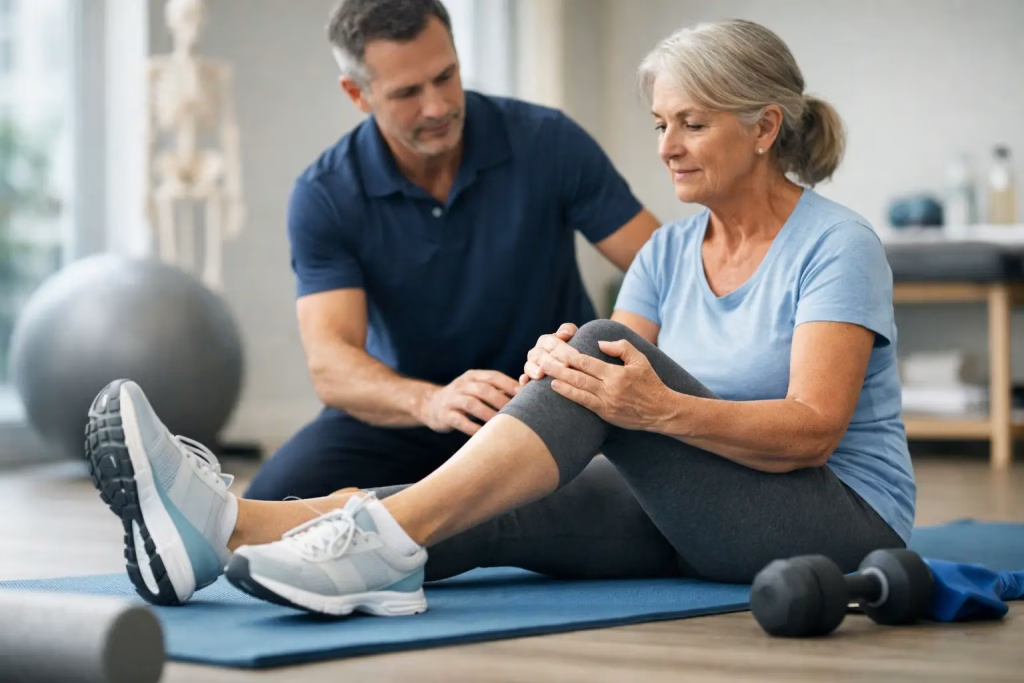
That first painful step after sitting through dinner, the hesitation before taking the stairs, or the knee that complains halfway through a walk can make everyday life feel smaller. This guide to osteoarthritis knee exercises is designed to help you move with more confidence, build useful strength and stay involved in the activities that matter to you.
Knee osteoarthritis is common after 40, but it does not mean you need to stop exercising or accept a life organised around pain. The right amount of movement can reduce stiffness, support the joint and make tasks such as getting out of a chair, gardening, walking the dog and keeping up with the grandchildren feel more manageable.
The key is not to push through sharp pain or copy a high-impact workout. It is to choose exercises that match your current ability, perform them consistently and progress gradually.
Why movement helps an osteoarthritic knee
Osteoarthritis affects the joint surfaces in the knee, but the knee is supported by far more than cartilage. Your thigh, hip and calf muscles help absorb force every time you stand, walk, climb stairs or get in and out of the car. When those muscles become weaker, everyday movements can place more demand on a sore knee.
Exercise cannot promise to remove arthritis from the joint. It can, however, improve the strength, balance and confidence that influence how well your knee copes with daily life. Many people also find regular movement reduces the stiffness that builds up after long periods of sitting.
There is a useful distinction between discomfort and a warning sign. Mild muscle effort, temporary stiffness or a low-level ache during a new exercise can be normal. Sharp pain, catching, a feeling that the knee will give way, major swelling or pain that is clearly worse the following day means the exercise needs changing. The goal is steady improvement, not proving how much you can tolerate.
Before you start: use the right dose
Start with a short session two or three times a week, allowing a rest day between strength sessions if your knee is irritable. A good starting point is one set of 8 to 10 repetitions for each exercise. If that settles well for a week or two, build towards two or three sets.
Use a stable chair, supportive shoes and a bench or kitchen counter for balance where needed. Move slowly enough that you stay in control. Breathe normally and aim for effort around 5 or 6 out of 10 – challenging, but not a strain.
Pain monitoring helps take the guesswork out of exercise. During movement, try to keep pain at a manageable level, roughly 0 to 3 out of 10. If symptoms rise above this, reduce the depth, number of repetitions or resistance. If your knee remains noticeably more painful or swollen for more than 24 hours afterwards, that was too much for now. Scale back next time rather than stopping all activity.
A guide to osteoarthritis knee exercises you can start at home
Seated knee straightening
Sit tall on a firm chair with both feet on the floor. Slowly straighten one knee until your leg is almost level with the floor, then lower it with control. Do not force the knee fully straight if it feels pinchy. Repeat 8 to 10 times on each side.
This simple movement works the front thigh muscle, which is important for standing, walking and stair climbing. If it becomes easy, pause for two or three seconds with the leg straight before lowering.
Sit-to-stand from a chair
Sit towards the front of a sturdy chair with your feet hip-width apart and slightly behind your knees. Lean your chest forward a little, push through both feet and stand up. Slowly sit back down, aiming to control the descent rather than dropping into the chair.
Start with a higher chair if needed, or use your hands lightly on the armrests. As you get stronger, use less hand support. Sit-to-stands are particularly valuable because they practise a movement you use throughout the day.
Glute bridge
Lie on your back with your knees bent, feet flat on the floor and arms by your sides. Gently tighten your buttocks and lift your hips until your body forms a comfortable line from shoulders to knees. Pause briefly, then lower slowly.
The bridge strengthens the buttocks and back of the thighs, helping the hips contribute more when you walk and climb. Keep the lift small if your back feels uncomfortable. You should feel your buttocks working more than your lower back.
Standing calf raise
Stand near a bench, chair or kitchen counter and hold on lightly. Rise onto the balls of both feet, pause, then lower your heels slowly to the floor. Keep your knees soft rather than locked.
Strong calves support walking and help you control each step. If both legs are comfortable, begin with 10 repetitions. Later, you may progress by putting a little more weight through one side, but only if the knee remains settled.
Side leg lift
Stand tall beside a bench or counter, holding on with one hand. Keep your body facing forward and slowly lift the outside leg sideways a short distance. Avoid leaning your trunk or turning your toes out. Lower with control and repeat, then change sides.
This targets the muscles on the outside of the hip. Stronger hips can improve leg control, particularly when walking on uneven ground, stepping off a kerb or climbing stairs.
Low step-up
Use the bottom step of a staircase or a low, stable platform. Place one whole foot on the step, push through that foot to stand up, then lower slowly. Keep your knee tracking in line with the middle toes rather than collapsing inwards.
Step-ups are more demanding than chair exercises, so they are best introduced once sit-to-stands feel comfortable. Start with a low step and fewer repetitions. A higher step is not automatically better – control and a settled knee matter more.
Keep walking, but make it manageable
Strength exercises work best alongside regular low-impact activity. Walking, cycling, pool exercise and gentle strength training are all useful options. The best choice depends on what you enjoy and what your knee tolerates.
If a 30-minute walk leaves you limping, do not assume walking is off limits. Try three 10-minute walks spread across the day, choose flatter ground, or reduce your pace temporarily. Cycling may feel better for some people because it is lower impact, while pool exercise can be a good option during a painful flare. There is no single perfect exercise for every arthritic knee.
Avoid the common boom-and-bust pattern: doing too much on a good day, then needing several days to recover. Consistency beats occasional hard sessions. A modest routine completed most weeks will usually do more for your mobility than a demanding plan you cannot sustain.
When to seek individual advice
A home programme is a good starting point, but some knee symptoms deserve a proper assessment. Arrange help if your knee frequently locks, gives way, becomes hot and very swollen, has changed shape, or pain is stopping you from sleeping or putting weight through the leg. Seek urgent medical care after a significant injury, or if calf swelling, redness, fever or unexplained severe pain develops.
You may also benefit from individual physiotherapy if you are unsure whether pain is from osteoarthritis, have had a previous knee injury or surgery, or have tried exercises without progress. A physiotherapist can check your strength, knee movement, walking pattern and balance, then adjust exercise depth, resistance and frequency to suit you.
At Growing Younger Physiotherapy, adults over 40 receive one-to-one care built around the activities they want to keep doing, whether that is walking around Howick, working, golf, gardening or playing with family. The right plan should fit your real life, not demand that you reshape your life around rehab.
Start smaller than you think you need to, give your body time to adapt, and keep showing up. A stronger knee is often built one controlled repetition, one comfortable walk and one good week at a time.
