The first real test after surgery is rarely the operation itself. It is getting out of a chair without bracing for pain, walking to the letterbox, sleeping comfortably, or trusting your body on the stairs again. This guide to surgical rehabilitation explains how a clear, progressive physiotherapy plan can help you regain movement, strength and confidence without rushing the process.
Whether you have had a knee replacement, shoulder repair, spinal procedure, fracture fixation or another orthopaedic operation, rehabilitation is where the result of surgery becomes part of your everyday life. The aim is not simply to tick off exercises. It is to help you return safely to the activities that matter to you: work, gardening, golf, caring for grandchildren, walking the dog or getting back to the gym.
Why rehabilitation matters after surgery
Surgery may repair, replace or stabilise a structure, but it does not automatically restore how that part of your body moves and works. Pain, swelling, stiffness and a natural fear of movement can quickly lead to weakness. After even a short period of reduced activity, the surrounding muscles lose capacity and everyday tasks start to feel harder than expected.
Good rehabilitation addresses the whole picture. It helps manage symptoms, restore joint movement, rebuild strength and improve balance or walking patterns. Just as importantly, it gives you a realistic understanding of what is safe at each stage.
For adults over 40, this matters because recovery is often happening alongside work, family commitments and other health considerations. You may have arthritis in another joint, a longstanding back problem, or simply less spare time to spend recovering. A generic exercise sheet is rarely enough. Your programme needs to meet you where you are, then progress as your body allows.
A guide to surgical rehabilitation: the stages that count
Recovery timelines vary widely. A straightforward procedure may allow early movement and loading, while a tendon repair or complex joint surgery may need firm protection for several weeks. Your surgeon’s instructions always come first, particularly around weight bearing, braces, slings, wound care and movement restrictions.
Stage one: protect the surgical area and settle symptoms
In the first days and weeks, the priorities are usually protecting the repair, controlling swelling and beginning safe movement. This can include learning how to use crutches, a walking frame or a sling correctly, practising getting in and out of bed, and completing gentle exercises prescribed for your operation.
This stage can feel slow, especially if you were active before surgery. However, doing too much too soon may increase swelling and pain, or place unnecessary stress on healing tissue. Doing too little can leave you stiff and weak. The right level is specific to your surgery, your symptoms and your surgeon’s protocol.
A physiotherapist can check how you are moving, identify compensations that may cause trouble elsewhere, and make sure you understand what is normal. Some discomfort during rehabilitation is expected. Sharp pain, a substantial increase in swelling, or symptoms that remain worse well after exercise are signs the plan may need adjusting.
Stage two: restore movement and everyday control
Once the early healing phase is established, rehabilitation shifts towards improving range of movement and control. For a knee, that may mean bending and straightening more comfortably, walking with less of a limp and managing stairs. For a shoulder, it may mean gradually reaching overhead, dressing independently or using the arm for light household tasks.
This is often the stage where people feel impatient. They may be moving better but still lack the strength or confidence they expected. Progress is rarely a straight line. A busy day, poor sleep, extra walking or an exercise progression can cause a temporary flare-up without meaning you have damaged anything.
The key is to look at trends over one to two weeks, rather than judging recovery by one difficult day. A programme should be progressed when your body is coping, not simply because a certain date has arrived.
Stage three: rebuild strength for real life
Movement alone is not enough. To return to an active, independent life, you need strength and endurance that match your daily demands. This is where well-chosen exercise becomes particularly valuable.
Your physiotherapist may use variations of squats, step-ups, bridges, resistance exercises, balance work and functional lifting, adapted to your operation and current ability. The exercises should have a purpose. If your goal is to walk the coastal path, carry groceries, get back on your bike or play a full round of golf, your plan needs to prepare you for those tasks.
Strength work does not have to mean punishing workouts. It means gradually exposing your body to enough load to become more capable. The best programme is one you can perform consistently, with clear progressions and a sensible amount of challenge.
Stage four: return to the activities you value
The final part of recovery is not just being discharged because your scar has healed. It is returning to life with confidence. Depending on your operation, that may involve practising uneven-ground walking, kneeling, getting up from the floor, reaching, lifting, pivoting or returning to recreational sport.
This stage is where individual goals matter most. Someone recovering from shoulder surgery who wants to hang washing has different demands from someone who wants to swim laps. Both deserve rehabilitation that reflects their life rather than a one-size-fits-all finish line.
What makes a rehabilitation plan effective?
A useful surgical rehabilitation plan is specific, measured and flexible. Specific means it respects your procedure and your personal goals. Measured means progress is based on real changes in pain, movement, strength and function. Flexible means it can be adjusted when your body has a flare-up, your surgeon updates restrictions, or your lifestyle makes the original plan unrealistic.
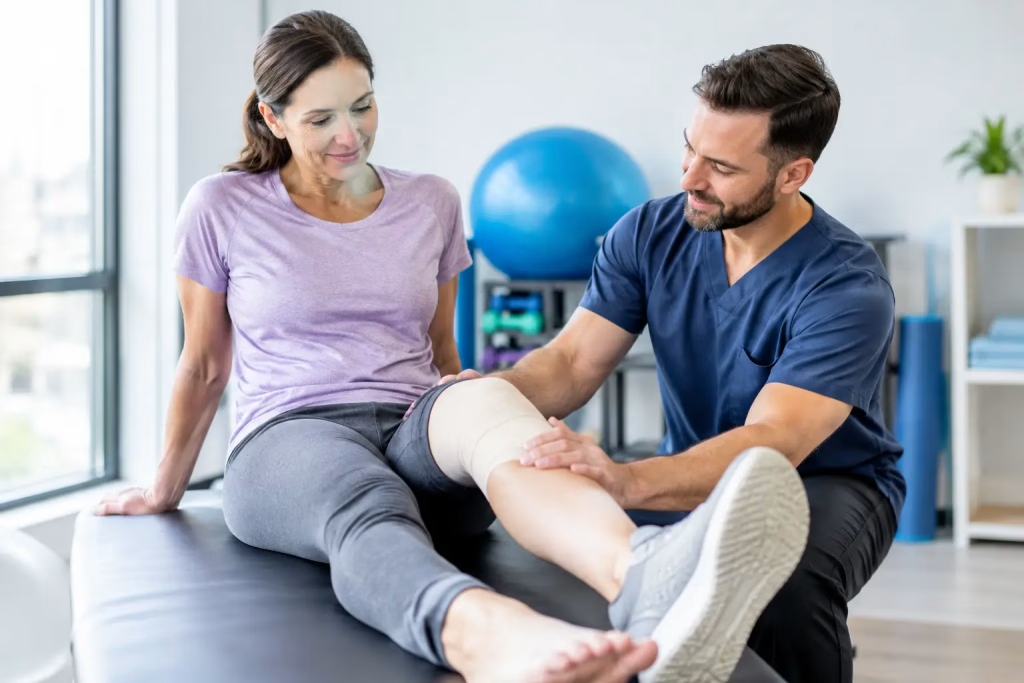
One-to-one physiotherapy can be especially helpful after surgery because small details matter. A limp, guarded shoulder movement or loss of balance can be easy to miss when you are following an online programme alone. Hands-on assessment and practical coaching can help you move more efficiently while exercise builds longer-term capacity.
At Growing Younger Physiotherapy, appointments are designed to give adults over 40 the time and personal attention needed to understand their recovery, not just be handed a list of exercises and sent on their way.
Common mistakes that slow recovery
The most common mistake is trying to copy another person’s recovery. Two people can have the same operation and very different restrictions, pain levels and progress. Age, previous activity, the extent of the procedure and other medical conditions all play a part.
Another is relying on rest for too long. Rest is essential early on, but prolonged avoidance can make stiffness, weakness and fear worse. The goal is appropriate movement, not total inactivity.
Finally, people often stop rehabilitation as soon as daily pain eases. That may be enough to get around the house, but it may not be enough to safely manage a long walk, a full workday or a return to sport. Finishing too early can leave a gap between feeling better and being properly prepared.
When to contact your surgeon or health professional
Some post-operative soreness and swelling are normal, but certain symptoms need prompt medical advice. Contact your surgical team or seek urgent care if you notice:
- increasing redness, heat, discharge or opening around the wound
- fever, chills or feeling generally unwell
- sudden calf pain, marked swelling or unexplained shortness of breath
- severe pain that is not settling with your prescribed plan
- new numbness, weakness or loss of movement
If you are unsure, it is better to ask. Early advice can prevent a small concern becoming a bigger setback.
Making rehab fit a busy life
Consistency beats perfection. Short, regular exercise sessions usually work better than attempting one long session when you are already tired. Keep your exercises attached to an existing routine, such as after breakfast or before your evening shower, and use the reminders recommended by your physiotherapist.
It also helps to plan your week honestly. If you know you will be on your feet for a family event or returning to work, your exercise load may need adjusting around it. Rehabilitation should support your life, not feel like another full-time job.
Recovery after surgery asks for patience, but it should never leave you guessing. With the right guidance, steady effort and a plan built around what you want to get back to, each small improvement becomes proof that your body can become strong and capable again.
