
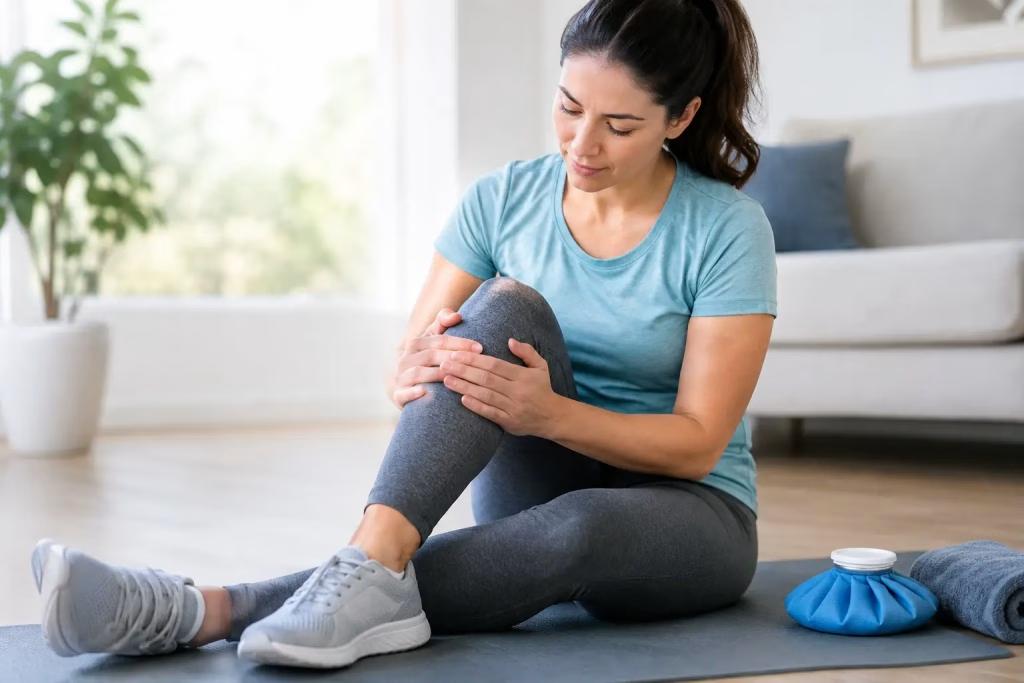
A knee that suddenly feels tight, puffy or difficult to bend can make ordinary plans feel much harder. Stairs become a calculation, getting out of the car takes longer, and even a regular walk may feel out of reach. Knowing how to manage knee swelling early can reduce discomfort and help you stay safely mobile while you work out what has caused it.
Knee swelling is not a diagnosis on its own. It is your body’s response to irritation, injury or strain inside or around the joint. Sometimes it follows an obvious event, such as a twist while gardening, a misstep on the footpath or a knock during sport. Other times, it builds slowly after a period of extra walking, kneeling, squatting or returning to exercise too quickly.
The right response depends on the cause, how quickly the swelling appeared and whether the knee feels stable. The aim is not to push through it or stop moving completely. It is to settle the irritation, protect the joint and restore confident movement.
How to manage knee swelling in the first 48 hours
If the swelling is new and linked to activity or a minor injury, give the knee a short period of relative rest. This does not mean staying on the couch for days. It means avoiding the activities that clearly aggravate it, such as deep squats, lunges, kneeling, running, repeated stairs or long walks on uneven ground.
Use cold therapy if it helps your symptoms. A cold pack wrapped in a thin towel can be placed on the knee for 10 to 15 minutes at a time, several times across the day. Never put ice directly on your skin, and do not use it for so long that the area becomes numb or painful. Cold can ease pain and may make the knee feel less hot and tight, but it is not a cure for the underlying problem.
Gentle compression may also be useful. A comfortable elastic knee support or compression bandage can help limit the feeling of fullness, particularly when you need to be up and about. It should feel supportive, not restrictive. Loosen or remove it if your foot becomes cold, pale, tingly or more swollen.
When resting, raise the leg so the knee and lower leg are supported above the level of your heart where practical. A few pillows under the calf and ankle can help. Avoid leaving a pillow directly behind a bent knee for long periods, as this can encourage stiffness in the bent position.
Short, regular movement is usually better than complete rest. Every hour or two, gently straighten and bend the knee within a comfortable range. A few easy laps around the house may be enough initially. The key is to avoid a large increase in pain or swelling afterwards.
Do not ignore what the swelling is telling you
For adults over 40, knee swelling can occur for many reasons. It may be related to osteoarthritis, a flare-up after doing more than the knee is ready for, a meniscus injury, tendon irritation, bursitis or an injury to a ligament. Inflammatory conditions can also cause a swollen knee. Each needs a slightly different plan.
A knee that swells after a long weekend in the garden may simply be reacting to an abrupt increase in load. In that case, settling symptoms and gradually rebuilding leg strength is often more useful than avoiding activity indefinitely. By contrast, a knee that buckles, locks, catches sharply or swells substantially after a twist needs a proper assessment before you try to exercise through it.
The size and timing of the swelling can offer clues. Swelling that arrives almost immediately after a significant injury, especially with severe pain, may indicate bleeding into the joint or a more serious injury. Swelling that appears gradually over the next day can be a response to irritation within the joint. Neither pattern should be self-diagnosed, but both are worth noticing and describing clearly to your physiotherapist or doctor.
Keep moving, but choose the right movements
Once the initial pain has settled, your knee needs the right amount of movement to avoid becoming stiff and weak. The right amount is individual. As a simple guide, activity should not cause sharp pain, marked limping or a clear increase in swelling later that day or the following morning.
Start with gentle range-of-motion work. Sitting on a firm chair, slowly slide your foot forwards to straighten the knee, then draw it back again. You can also lie down with the leg supported and gently tighten the thigh muscle by pressing the back of the knee towards the bed. Hold for a few seconds, then relax.
If walking is comfortable, shorter and flatter walks are preferable to one long outing. Swimming or cycling with minimal resistance can be good options for some people because they reduce impact, although they are not suitable if bending the knee is painful or restricted. This is where a personalised plan matters. The best exercise is not the one that looks impressive. It is the one your knee can tolerate and that helps you return to the activities you value.
Medication can help, but it is not the whole plan
Over-the-counter pain relief may help you move more comfortably, but it should be used carefully. Paracetamol may be suitable for some people. Anti-inflammatory medicines can reduce pain and swelling for others, but they are not appropriate for everyone, particularly if you have stomach, kidney, heart or blood pressure concerns, take blood-thinning medication, or have been advised to avoid them.
Speak with a pharmacist, GP or other qualified health professional before taking a new medicine, especially if you have ongoing health conditions. Pain relief can create a useful window for gentle movement and sleep. It should not be used as permission to return immediately to heavy training, long hikes or a full day of physical work.
When a swollen knee needs urgent medical attention
Most mild knee swelling improves with sensible load management, but some symptoms need prompt assessment. Seek urgent medical care if you have any of the following:
- a red, hot knee with fever, chills or feeling generally unwell
- severe pain, major swelling or an obvious change in the shape of the joint after an injury
- inability to put weight through the leg or take a few steps
- a knee that is locked and cannot fully bend or straighten
- new calf swelling, calf pain, chest pain or shortness of breath
- numbness, a cold foot, or changes in foot colour.
These signs can point to infection, fracture, a significant joint injury, circulation problems or other conditions that should not wait for home treatment.
Get help if swelling keeps returning
A knee that repeatedly swells after normal daily activity is asking for more than a bag of frozen peas. Recurring swelling often means the joint is being overloaded, the supporting muscles are not sharing the work well, or an underlying issue has not been addressed.
A physiotherapy assessment can identify what is provoking the swelling, check knee movement and stability, and look at how your hip, ankle and walking pattern may be affecting the joint. For some people, the answer is a gradual strengthening programme. For others, it may involve adapting work tasks, improving balance, changing training volume or seeking medical imaging or a specialist opinion.
Hands-on treatment may help reduce pain and restore movement, but lasting improvement usually comes from a plan that builds capacity. Stronger thighs, hips and calves can reduce the strain placed on the knee during stairs, walking, lifting and getting up from a chair. This matters even more if you want to stay active for work, family, golf, bowls, gym sessions or simply keeping up with life.
At Growing Younger Physiotherapy, we take the time to assess the whole picture rather than handing out a generic sheet of exercises. For a swollen knee, the goal is clear: settle the irritation, understand the cause and help you return to the movement that keeps you independent and confident.
Treat knee swelling as useful information, not a reason to give up on being active. A calm, early response and the right professional guidance can help you protect your knee now while continuing to build the strength you need for the years ahead.
