
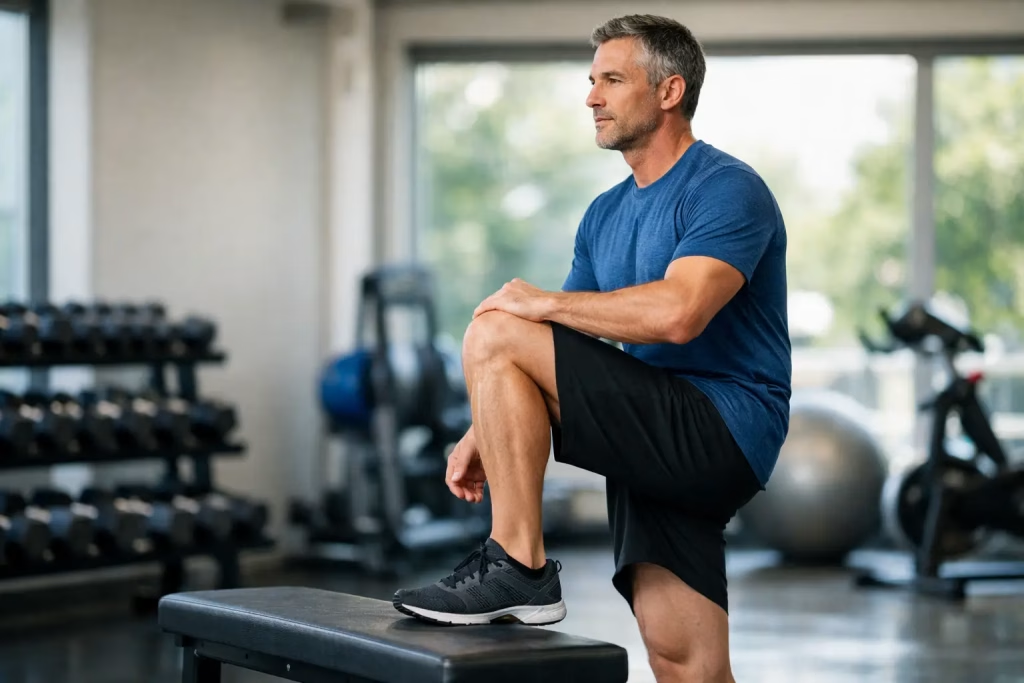
Standing up from a low chair should not feel like a major task. Neither should taking the stairs, carrying groceries, getting down to the garden, or keeping pace on a walk around the neighbourhood. Yet after an injury, a spell of pain, surgery, illness or simply becoming less active, leg strength can fade faster than many people expect.
Learning how to rebuild leg strength is not about punishing yourself with hard workouts. For adults over 40, the best results usually come from finding the right starting point, training consistently and progressing at a pace your body can handle. The aim is practical: stronger legs that help you move with confidence and keep doing the things you enjoy.
Why leg strength drops after 40
Leg weakness is often not just an age problem. It is commonly a response to reduced use. When a sore knee makes you avoid stairs, back pain stops you walking as far, or an ankle injury keeps you off your feet, the muscles around your hips, thighs and calves receive less work. Over time, they lose capacity.
Pain can also create a frustrating cycle. You move less because it hurts, then ordinary movement feels harder because the muscles have weakened. The good news is that muscles can respond to training at any age. The key is giving them enough challenge to adapt without repeatedly aggravating the issue that caused you to slow down in the first place.
If weakness began suddenly, affects one side significantly more than the other, or comes with numbness, repeated falls, major swelling or loss of bladder or bowel control, seek medical advice promptly. These symptoms need proper assessment rather than a home exercise plan.
Start with the movement that matters most
Before choosing exercises, think about where your legs are letting you down. Is it rising from a chair? Walking downhill? Climbing stairs? Balancing while putting on trousers? Returning to golf, bowls, tennis or longer bush walks?
This matters because leg strength is not one single quality. Your glutes help control your pelvis and power you up stairs. Your quadriceps at the front of the thigh support the knee and help you stand. Hamstrings assist with walking and bending. Calves help you push off the ground and maintain balance. A useful programme trains all of them, but it may put extra attention on the area most relevant to your goal.
At first, keep a simple baseline. Notice how many comfortable sit-to-stands you can complete from a standard chair, how long you can walk before symptoms build, or whether you need the handrail for stairs. These everyday measures are often more meaningful than a number on a gym machine.
How to rebuild leg strength with a safe foundation
For most people, two or three strength sessions each week is a productive place to begin. Your muscles need repeated exposure to load, but they also need recovery. Leave at least a day between harder sessions for the same muscle groups, especially when restarting after a long break.
Begin with movements you can perform with control. Mild effort and muscular fatigue are expected. Sharp pain, a feeling that the joint is giving way, or symptoms that remain noticeably worse the following day are signs that the exercise, range or load may need adjusting.
1. Sit-to-stands
Sit towards the front of a stable chair with your feet about hip-width apart. Lean your chest slightly forward, press through your feet and stand tall. Then lower slowly and with control.
This is one of the most useful ways to rebuild functional thigh and hip strength because it directly practises a movement you need throughout the day. Start with a higher chair or use your hands lightly on the armrests if needed. As you improve, reduce the help from your hands, lower the chair height, or hold a light weight close to your chest.
2. Supported squats
Hold a kitchen bench, sturdy rail or the back of a solid chair. Send your hips back as though you are sitting down, allow your knees to bend in line with your toes, then stand again. Keep the range comfortable.
A squat does not have to be deep to be effective. For someone with a sensitive knee, a smaller, well-controlled squat can be a better starting point than forcing depth. Over time, greater depth or a little extra load creates the progression your muscles need.
3. Step-ups
Using the bottom step of a staircase, place one whole foot on the step and push through that leg to rise. Control the lowering phase rather than dropping back down. Hold the rail at first if balance is a concern.
Step-ups build the kind of single-leg control required for stairs, curbs and uneven ground. A lower step is not a lesser exercise. It is the sensible option until you can complete each repetition without pain, wobbling or pushing heavily through the other leg.
4. Calf raises and hip work
Stand near a bench for support, rise onto the balls of both feet, pause briefly, then lower slowly. Your calf muscles play a major role in walking endurance and balance, but they are often overlooked.
Add a hip-focused movement as well, such as standing side leg lifts or a bridge on the floor. These exercises help strengthen the muscles around the pelvis that steady you when walking and standing on one leg. Move slowly. Swinging the leg or arching the lower back simply shifts the work away from the muscles you are trying to train.
Progress gradually, not randomly
The body gets stronger when the work is challenging enough that it has a reason to adapt. Doing the same easy set forever may maintain your current ability, but it is unlikely to rebuild much strength.
A practical starting point is one or two sets of 8 to 12 controlled repetitions for each exercise. The final few repetitions should feel like work while still allowing good form. When that becomes comfortable, change one variable: add two repetitions, include another set, use a slightly lower chair, hold a small weight, or increase the step height.
Do not change everything at once. That is where well-meaning people often overdo it. A steadier approach gives you a clearer idea of what your body tolerates and reduces the chance that a sore joint derails your progress.
Some muscle soreness for a day or two after new exercise is normal. Joint pain that is sharper, swelling that increases, or discomfort that makes daily activity worse is different. Reduce the load or range, then seek advice if it does not settle.
Strength training works better with regular movement
A short strength session is valuable, but your legs also benefit from being used across the week. Walking, cycling, swimming, gardening and purposeful housework can all support your return to better function. Choose an activity you will actually do, rather than one that looks impressive on paper.
Walking is excellent for general fitness, but it does not always provide enough resistance to rebuild significant strength by itself. Think of walking as the foundation for daily movement and targeted strength work as the tool that builds your reserve. That reserve is what makes hills, stairs, travel and busy days feel more manageable.
Recovery also counts. Sleep, adequate protein in your meals and regular hydration support muscle repair. If you have diabetes, osteoporosis, heart concerns, a history of falls, or take medicines that affect balance, a more tailored plan may be the safer choice.
When physiotherapy can make the difference
If pain, fear of reinjury or a lack of progress is holding you back, a one-to-one physiotherapy assessment can remove much of the guesswork. A physiotherapist can identify whether your limitation is mainly strength, joint stiffness, balance, tendon irritation, back-related symptoms or a combination of factors.
That assessment matters after knee, hip, ankle or back problems, because the exercise that helps one person may be too much, too little or simply the wrong fit for another. At Growing Younger Physiotherapy, we help people over 40 build a clear, practical pathway back to stronger movement, with exercises matched to their goals and current ability.
Stronger legs are built one controlled repetition at a time. Start where you are, make the work slightly harder when your body is ready, and let your progress show up in the moments that matter: walking further, climbing stairs with less hesitation, and trusting your body to keep up with your life.
