
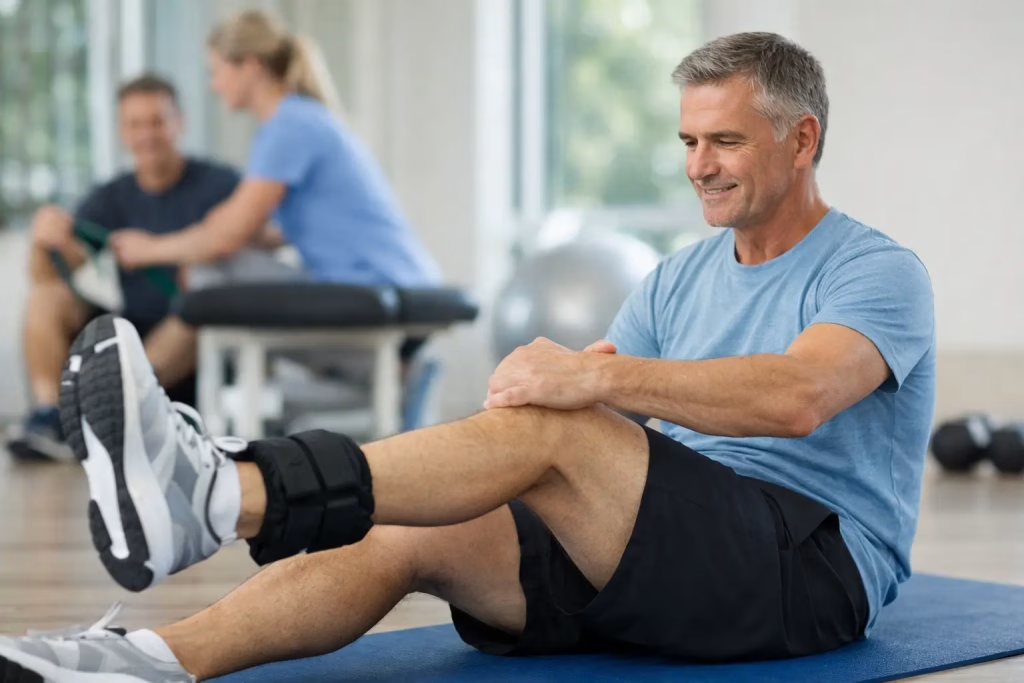
The knee that used to forgive a big weekend walk, a game of tennis, or a long day in the garden often stops being so generous after 40. That does not mean you are fragile. It usually means your knee now responds better to the right load, the right timing, and a rehabilitation plan that matches your actual life.
That is why knee rehabilitation exercises over 40 need a slightly smarter approach than the random stretches or online workouts people often try first. If your knee is stiff in the morning, sore on stairs, aching after sport, or unsettled after an old injury, the goal is not to push through pain. The goal is to rebuild strength, control and confidence so you can keep doing the things that matter.
Why knee rehab changes after 40
After 40, recovery can feel slower, especially if you are juggling work, family, stress, and less sleep than you would like. Muscle mass tends to drop with age if you are not actively training it, and joints often become less tolerant of sudden spikes in activity. Old injuries can also start to make themselves known again.
That does not mean your knee cannot improve. In many cases, it improves very well. It simply means the best results usually come from a program that builds gradually and consistently, rather than one that relies on rest alone or aggressive exercise too soon.
Pain also does not always tell the whole story. Some people have a very sore knee with only a modest injury. Others have significant weakness and poor control with only mild pain. Good rehab looks at both. It aims to settle symptoms while improving how the leg works.
What good knee rehabilitation exercises over 40 should do
A useful rehab program should help you in four areas. It should reduce irritation, improve movement, restore strength, and prepare you for real-life demands such as stairs, hills, squatting, lifting, walking longer distances, or getting back to golf, bowls, hiking or the gym.
That is why isolated exercises are only part of the picture. Your knee does not work alone. The hips, calves, ankles and even your balance play a role in how much stress the knee takes. If those areas are weak or stiff, the knee often ends up doing more than its fair share.
Start with symptom-friendly movement
If your knee is currently aggravated, begin with exercises that keep it moving without stirring it up. The first aim is to calm the joint and restore trust in movement.
Heel slides
Lie on your back or sit with your leg out straight, then slowly bend and straighten the knee within a comfortable range. This is simple, but useful. It helps reduce stiffness and can make walking feel easier, particularly after a flare-up or surgery.
Quad setting
With the leg straight, gently tighten the front of the thigh and press the knee down towards the bed or floor. Hold for a few seconds, then relax. This helps switch the quadriceps back on, which is often necessary after swelling, pain or inactivity.
Supported weight shift
Stand holding a bench or kitchen counter and gently shift weight from one leg to the other. This is a good early step if full single-leg loading feels uncertain. It helps restore confidence and starts preparing the knee for normal walking.
At this stage, mild discomfort can be acceptable, but sharp pain, worsening swelling, or limping afterwards are signs to scale it back.
Build strength where it counts
Once the knee settles enough to tolerate more load, strengthening becomes the main event. This is where many people over 40 finally start making real progress.
Sit to stand
Using a chair, stand up and sit down slowly without using your hands if possible. This is one of the most practical exercises you can do because it directly carries over to daily life. If it is too hard, use a higher chair. If it becomes easy, slow it down or hold a light weight.
Mini squats
Holding on for support if needed, bend slightly through the hips and knees, then return to standing. You do not need deep squats straight away. A comfortable, controlled range is enough to build tolerance. The key is good alignment and steady movement.
Step-ups
Use a low step and step up, then back down with control. Stairs are a common trouble spot for sore knees, so this exercise has strong everyday value. Start low and focus on smooth control rather than height.
Bridge
Lying on your back with knees bent, lift your hips off the floor and pause briefly. While this is not a direct knee exercise, stronger glutes reduce unnecessary strain through the knee during walking, stairs and squatting.
Calf raises
Stand and rise onto your toes, then lower slowly. The calf helps absorb force when you walk and climb. If it is weak, the knee can end up working harder.
For most people, two to three sessions a week is a realistic starting point for strengthening. More is not always better. The tissue needs enough challenge to adapt, but also enough recovery to settle and improve.
Do not skip balance and control
Many knee problems are not just about strength. They are also about control, especially when turning, stepping sideways, walking on uneven ground, or reacting quickly.
Single-leg stand
Stand on one leg near a bench or wall for support. Start with short holds. If that is easy, try turning your head slightly or standing on a folded towel. Better balance can improve confidence and reduce the feeling that the knee is unreliable.
Small forward reach
Stand on one leg and reach the other foot forward lightly, then return. This teaches the standing leg to control movement through the hip, knee and ankle together.
These drills are especially helpful if your knee feels wobbly, unstable, or awkward after time off activity.
How hard should rehab feel?
This is where people often get stuck. Some avoid exercise because they think any pain means damage. Others push too hard because they want quick results. Usually, the sweet spot is in the middle.
A mild increase in discomfort during exercise can be acceptable if it settles within the next 24 hours and does not leave you more swollen, more stiff, or limping. If pain keeps climbing through the session or the knee is clearly worse the next day, the load is probably too much for now.
Progress is not always linear. One week can feel great, then a longer walk or a busy day on your feet stirs things up. That does not mean rehab is failing. It often means your knee is still building capacity and your program needs a small adjustment.
The common mistakes that slow recovery
One of the biggest mistakes is doing only gentle mobility work for weeks and never progressing to real strength. Movement matters, but knees need load to get stronger.
Another common issue is choosing exercises that are too advanced too early. Deep lunges, jumping drills, or high-volume classes can be useful later, but they are not always the best first step for a painful knee over 40.
There is also the problem of inconsistency. Doing a large session once a week and nothing in between rarely works well. Short, regular sessions usually beat occasional heroic efforts.
And finally, many people ignore the bigger picture. Sleep, body weight, walking volume, footwear, previous injuries and hip strength can all affect how the knee responds. Rehab works best when those factors are considered, not brushed aside.
When to get professional help
If your knee is locking, giving way, swelling regularly, or stopping you from work, exercise or sleep, it is worth getting it assessed properly. The same applies if you have had pain for more than a few weeks, if you are recovering from surgery, or if you keep trying exercise but cannot find the right level.
This is where one-to-one physiotherapy can save a lot of time and frustration. A tailored plan should match your specific problem, your current strength, and your goals. At Growing Younger Physiotherapy, that often means helping local adults over 40 get clear answers, practical treatment and a rehab plan they can actually stick to.
A simple way to structure your week
For many adults, a workable routine looks like two or three strength sessions, most days of light walking or cycling if tolerated, and brief mobility work on stiff days. You do not need a perfect program. You need one you can keep doing.
If one exercise consistently flares the knee, it may need adjusting, not abandoning altogether. Small changes in range, tempo, support or volume can make an exercise far more tolerable while still giving benefit.
The best knee rehabilitation exercises over 40 are not the fanciest ones. They are the ones that reduce pain, rebuild trust in the joint and help you return to ordinary life without constantly thinking about your knee. Start where your knee is, not where it used to be, and give it a reason to get stronger.
