
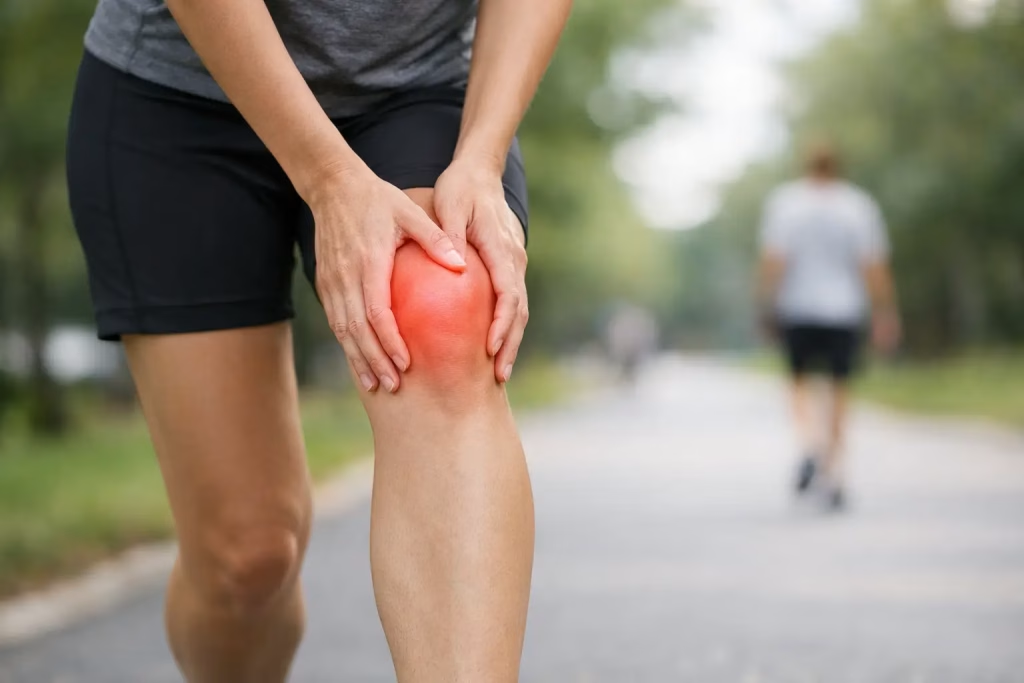
A knee can make a surprisingly loud click on an ordinary walk to the letterbox, down the stairs or around the shops. If you are asking, “why does my knee click walking?”, the reassuring answer is that clicking alone is often harmless. But when the sound arrives with pain, swelling, catching or a loss of confidence in your leg, it deserves proper attention.
For adults over 40, the goal is not simply to silence every sound. Knees are working joints, and many make occasional noises. The priority is knowing whether your knee is moving well, tolerating the activities you value and staying strong enough to support an active, independent life.
Why does my knee click walking?
A click, pop, crackle or grinding sensation is often described medically as crepitus. It can come from several places in and around the knee, and the meaning depends far more on your symptoms than on the sound itself.
Sometimes it is simply tiny gas bubbles shifting within the joint fluid, much like cracking a knuckle. In other cases, a tendon or ligament moves over a bony point as the knee bends and straightens. Neither necessarily means damage is occurring.
The kneecap is another common source. As you walk, squat or climb stairs, the kneecap glides in a groove at the front of the thigh bone. If the muscles around the hip and thigh are weak, stiff or not sharing the load effectively, that glide can become less smooth. You may notice a click or crunch, particularly on stairs, hills or after sitting for a while.
Changes to joint cartilage can also contribute. Cartilage naturally changes over time, and osteoarthritis is more common as we get older. That does not mean a clicking knee automatically equals arthritis, nor does it mean you must stop being active. Many people with early joint changes can walk, exercise and enjoy daily activities very well with the right strength, movement and load management plan.
Occasionally, clicking comes from the meniscus – the cushioning cartilage inside the knee. A meniscus may become irritated after a twist, a kneel in the garden, a fall or even gradual wear over time. This is more concerning when the click feels like something is catching inside the joint.
When knee clicking is usually not a major concern
If your knee clicks but does not hurt, swell, give way or limit how far you can walk, it is commonly not an urgent problem. A painless click that has been there for years and has not changed is rarely a reason to panic.
Pay attention to the bigger picture. Can you get up from a chair, walk the dog, use stairs and do your usual exercise without a growing ache afterwards? Is the knee stable? Can it fully bend and straighten? If the answer is yes, the noise may simply be part of how your joint moves.
It is also normal for sounds to be more noticeable when you are returning to activity after a quiet period. Muscles can become deconditioned surprisingly quickly after illness, travel or a busy few months. Starting gently and building back up is generally more useful than avoiding movement because of a sound alone.
Signs your clicking knee should be assessed
Clicking paired with certain symptoms is different. Arrange an assessment with a physiotherapist if the sound is new and persistent, or if you notice pain that is affecting your walking, sleep, work or exercise.
Be especially wary of swelling that appears after activity or injury, a knee that repeatedly gives way, or a joint that cannot fully straighten. A true locking episode – where the knee gets stuck and you cannot move it through its normal range – needs timely assessment. A sudden pop at the time of a twist or fall, followed by substantial pain, swelling or difficulty putting weight through the leg, also warrants prompt care.
Seek urgent medical attention following a significant injury if the knee looks deformed, you cannot bear weight, the joint is hot and very swollen, or you have fever or feel unwell. These are not symptoms to push through with exercises at home.
What you can do to help a clicking knee
For a painless or mildly irritated clicking knee, staying sensibly active is often the right starting point. Complete rest can leave the thigh and hip muscles weaker, which may make everyday knee loading feel harder when you return to it.
Begin by adjusting, not abandoning, the activities that stir things up. If long walks currently trigger an ache, try a shorter, flatter route for a week or two. If stairs are uncomfortable, use the handrail and reduce repeated trips where possible while you rebuild strength. Cycling, swimming or a gentle walk on level ground may be better tolerated than hills or deep squats for a short period.
Strength matters because your knee relies on your quadriceps, hamstrings, calves and hip muscles to absorb force with every step. Simple sit-to-stands from a firm chair, supported mini-squats, calf raises and controlled step-ups can be helpful options, provided they do not cause sharp or increasing pain. The correct starting point depends on your strength, balance, injury history and the nature of your symptoms.
A useful rule is to judge the 24 hours after activity. Mild discomfort that settles quickly can be acceptable while you build capacity. Pain that steadily worsens, swelling that increases or a limp that lasts into the next day suggests the activity was too much for now. Scale it back, then progress more gradually.
Footwear can play a part as well. Worn-out shoes or shoes that feel unstable may make walking less comfortable, particularly if you are doing a lot of it on hard surfaces. New shoes are not a cure for every knee problem, but a supportive, comfortable pair is a sensible foundation.
Why pushing through is not always the answer
There is a fine line between building healthy tolerance and repeatedly aggravating an injury. The old advice to simply “push through the pain” can be unhelpful, especially if the knee is swollen, unstable or locking.
At the same time, avoiding every movement that creates a click can lead to fear and deconditioning. A tailored approach lets you keep moving while addressing the reason your knee is unhappy. That may include hands-on treatment where appropriate, targeted strengthening, improving balance, adjusting walking or gym technique, and a clear progression back to the activities you enjoy.
This is particularly valuable if you have had a previous knee injury, surgery, arthritis diagnosis or a recent increase in exercise. Your best plan may look different from a friend’s, even if the two knees make the same sound.
How physiotherapy can give you clearer answers
A one-to-one physiotherapy assessment looks beyond the noise. Your physiotherapist can check how your knee bends and straightens, where the discomfort is located, how well your hip and ankle contribute to walking, and whether strength or balance is affecting the way you load the joint.
From there, you should have a practical plan rather than vague advice to rest indefinitely. That plan may involve modifying activity for a short time, building leg strength, improving confidence after an injury, or understanding how to manage osteoarthritis without giving up the things that matter to you.
At Growing Younger Physiotherapy, we work with adults who want to stay active, mobile and confident in everyday life. A clicking knee is often manageable, but getting it assessed early can prevent a small concern from becoming the reason you stop walking, exercising or enjoying time with family.
Your knee does not need to be perfectly silent to be healthy. It does need to feel dependable enough to take you where you want to go. If the clicking is paired with pain, swelling, catching or worry, a personalised assessment can help you move forward with more certainty.
