
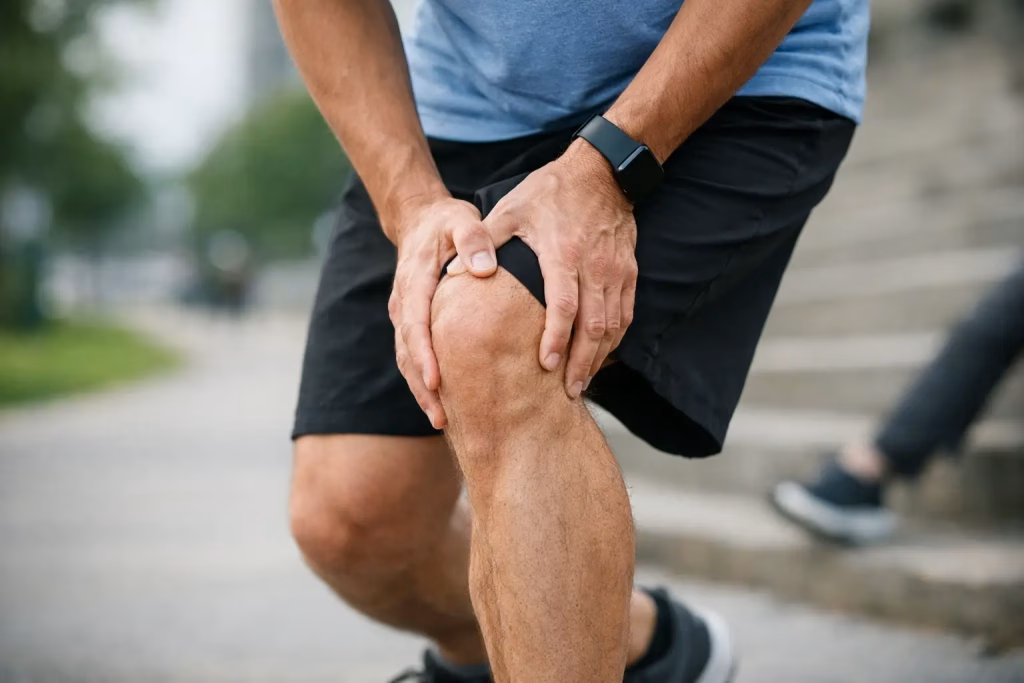
A knee that suddenly gives way can turn an ordinary step off the kerb, walk around the shops or trip down the stairs into a worrying moment. If you are wondering why knees buckle, the answer is not always a damaged knee. Sometimes pain makes the muscles briefly switch off; other times, weakness, balance changes or an injury mean the joint is not being controlled as well as it should be.
For adults over 40, that uncertainty can be as frustrating as the symptom itself. You may start avoiding your usual walk, golf, gardening or exercise class because you do not trust the leg beneath you. The good news is that knee buckling often has a clear contributing cause, and the right assessment can identify what needs attention.
What does it mean when a knee buckles?
People use “buckling” to describe several different sensations. Your knee may suddenly dip or feel as though it will not support your weight. It may give way when you turn, go downstairs or rise from a chair. You might also feel a wobble without actually falling.
This is different from a knee that is locked. A locked knee is one that physically cannot fully straighten or bend, sometimes because something inside the joint is blocking movement. It is also different from general stiffness after sitting, although stiffness and buckling can occur together.
The detail matters. Whether the knee buckles with pain, swelling, twisting, fatigue or no warning at all helps a physiotherapist work out which tissues and movement patterns may be involved.
Why knees buckle: common causes
Pain and muscle inhibition
Your quadriceps are the strong muscles at the front of the thigh. They help keep the knee steady as you stand, walk, squat and descend stairs. When the knee is painful or swollen, the body can temporarily reduce how effectively these muscles contract. This protective response is sometimes called muscle inhibition.
The result can be a sudden feeling that the leg has switched off. It does not mean you are weak-willed or that you simply need to “push through”. It means the knee needs a plan that settles irritability while progressively restoring muscle control.
Knee osteoarthritis
Osteoarthritis becomes more common with age, but an X-ray result alone does not tell the whole story. Some people have visible joint changes and very little pain, while others have symptoms that affect daily life. During a flare-up, pain, swelling, reduced confidence and weaker thigh muscles can all contribute to a knee feeling unreliable.
A well-designed exercise programme is often a key part of managing osteoarthritis. The aim is not to pretend the joint has not changed. It is to improve strength, movement and confidence so you can keep doing the things that matter to you.
A ligament injury or joint instability
Ligaments help guide and stabilise the knee. A twist during tennis, a misstep on uneven ground or a fall can irritate or injure these structures. The anterior cruciate ligament, medial collateral ligament and other supporting tissues can be involved, particularly if buckling began after a distinct incident.
Instability is more likely when the knee gives way during a turn or change of direction, or when it is followed by swelling. The severity varies greatly. Some injuries settle with focused rehabilitation; others need further medical assessment. An individual examination is the sensible way to tell the difference.
Meniscus irritation or a cartilage injury
The meniscus is a shock-absorbing cartilage structure within the knee. It can be irritated by a twist, deep squat or gradual wear over time. Symptoms may include pain along the joint line, catching, swelling and difficulty fully bending or straightening the knee.
Not every meniscus finding requires surgery. Many people improve with guided loading, strength work and changes to aggravating activities. However, a knee that repeatedly locks, cannot straighten, or has significant swelling after an injury should be assessed promptly.
Kneecap pain and poor movement control
Pain around or behind the kneecap can make stairs, hills, squats and getting up from a low chair uncomfortable. If the hip, thigh and calf muscles are not sharing the load well, the kneecap area can become sensitive and the leg may feel unsteady.
This is not usually fixed by one exercise copied from the internet. Your starting point needs to match your current strength, pain level and the movements you want to return to. For one person that may be walking the dog without hesitation; for another, it may be keeping up with grandchildren or returning to the gym.
Strength, balance and fatigue changes
A buckling knee is not always a problem located only at the knee. Reduced strength in the quadriceps, glutes or calves can make it harder to control the leg, especially when getting downstairs or walking on uneven ground. Balance and reaction time also change when we are tired, less active after an injury, or worried about falling.
This is why generic exercise programmes can miss the mark. Stronger muscles help, but strength needs to be built in useful positions and paired with balance and movement practice.
Less common causes that need medical review
Nerve irritation from the lower back, neurological conditions and medication side effects can occasionally contribute to leg weakness or giving way. If both legs are affected, weakness is progressing, or you also have numbness, changes in bladder or bowel control, or significant back pain, seek urgent medical advice.
When knee buckling needs urgent attention
A knee that gives way once after a long, tiring day is different from a sudden injury with major swelling. Arrange prompt medical assessment if you cannot put weight through the leg, the knee looks deformed, or there is severe pain after a fall or twist.
You should also seek urgent advice for a hot, red, very swollen knee, fever or feeling unwell, as these symptoms can signal a problem beyond a routine strain. New calf swelling, warmth or shortness of breath also needs urgent medical attention. Do not try to exercise through these warning signs.
What a physiotherapy assessment should look for
The most useful assessment starts with your story. When did it begin? Did it follow an injury? Does the knee buckle on stairs, while pivoting, or only after you have been on your feet for a while? Are there swelling, clicking, catching or back symptoms?
A physiotherapist should then assess your knee movement, swelling, ligament and meniscus signs where appropriate, as well as your hip and ankle movement, muscle strength, balance and walking pattern. This broader view is valuable because a knee is part of a chain, not a hinge working in isolation.
At Growing Younger Physiotherapy, one-to-one sessions allow time to understand what is limiting you and build a plan around your real life, rather than handing you a generic sheet of exercises.
Building trust in your knee again
Treatment depends on the cause, but the goal is consistent: help you move with more control and less fear. Early on, that may involve reducing painful irritation, improving knee movement and choosing temporary alternatives to activities that repeatedly trigger buckling. Complete rest is rarely the best long-term answer, but neither is forcing through sharp pain or repeated giving-way episodes.
As symptoms settle, rehabilitation should progress towards the tasks your knee needs to manage. That commonly includes sit-to-stands, step-ups, squats, calf work, hip strength and balance exercises. The correct level matters. An exercise that is too easy will not build capacity; one that is too difficult can flare symptoms and undermine confidence.
If stairs are the main issue, practise needs to include stair-related control. If your knee gives way during golf, gardening or walking on the beach, your programme should eventually prepare you for those demands. This is how exercise becomes practical rehabilitation rather than another task on your to-do list.
What to do while you wait for an appointment
Avoid situations where a sudden buckle could cause a fall, such as carrying heavy loads on stairs or walking quickly over uneven ground. Use a handrail, wear supportive shoes and consider a walking aid temporarily if you do not feel safe.
Keep gently moving within a comfortable range instead of spending days on the couch. Short, regular walks on level ground may be better tolerated than one long outing. If the knee is swollen after activity, reducing the load for a day or two and using simple comfort measures can help. Make a note of when the knee gives way and what you were doing, as this information is useful during assessment.
You do not have to accept an unreliable knee as a normal part of getting older. With a clear diagnosis, sensible progression and support that fits your goals, many people can return to moving freely and trusting their legs again.
