
Your glutes should help you rise from a chair, climb the stairs, carry groceries and enjoy a walk without your lower back or knees doing all the work. Yet after 40, many people become less active through injury, busy work schedules or simple stiffness – and the glutes can gradually switch off. The best exercises for glute strength are not necessarily the hardest ones. They are the movements you can perform with good control, build up gradually and continue doing consistently.
Strong glutes are about far more than appearance. They provide the power and stability that help keep your pelvis, hips, knees and lower back working together. For adults who want to stay active and independent, this can mean more confidence getting down to the garden, playing with grandchildren, returning to golf or simply moving through the day with less discomfort.
Why glute strength matters more as we get older
The gluteal muscles sit around the back and side of the hip. The larger gluteus maximus helps drive you forwards when standing, climbing and walking uphill. The smaller muscles on the side of the hip help control the pelvis and stop the knee from collapsing inward with each step, squat or stair climb.
When these muscles are weak or poorly coordinated, the body finds workarounds. You may feel your lower back tighten during housework, notice sore knees after stairs, or struggle to balance on one leg while putting on a shoe. Weak glutes are not the only cause of these problems, but they are often part of the picture.
The right approach depends on your starting point. A person recovering from knee surgery needs a different plan from someone who can already walk hills comfortably but wants more power for tennis. Pain, recent injury, osteoporosis, joint replacement and balance concerns all matter. That is why quality of movement should come before heavier weights or high repetitions.
Best exercises for glute strength and everyday movement
The following exercises build from simple activation and control to stronger functional movements. Choose two or three that suit your current ability, rather than trying to do everything at once. If an exercise causes sharp, worsening or lingering pain, stop and seek individual advice.
Glute bridge
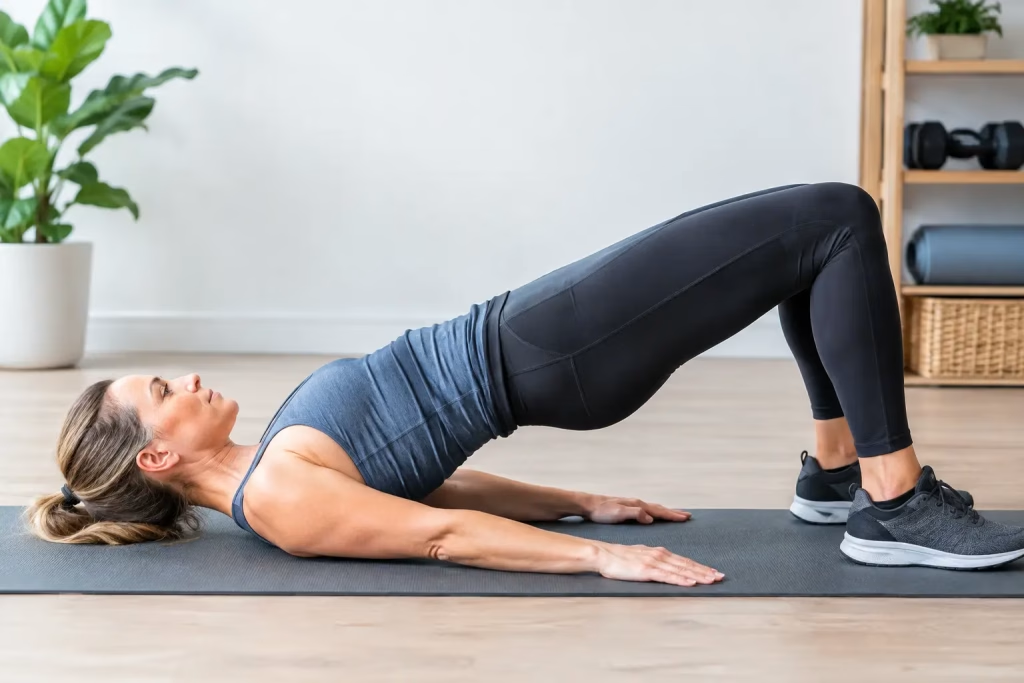
The bridge is an excellent starting point because it strengthens the glutes without placing much load through the knees. Lie on your back with your knees bent, feet hip-width apart and arms relaxed by your sides. Gently brace your stomach, press through your heels and lift your hips until your body forms a comfortable line from shoulders to knees.
Pause for two or three seconds, squeeze your buttocks, then lower slowly. Avoid pushing so high that your lower back arches or your hamstrings cramp. Start with two sets of 8 to 12 repetitions. When this feels easy, place a resistance band above your knees or hold a light weight across the hips.
Sit-to-stand
This is strength training for real life. Standing up from a chair uses the glutes, thighs and trunk in the same pattern you use many times each day. Sit towards the front of a firm chair with your feet under your knees. Lean forward slightly from the hips, press through both feet and stand tall without using your hands if safe to do so.
Lower yourself slowly, aiming to control the final part rather than dropping back into the chair. If it is too difficult, begin with a higher chair or use your hands lightly. To progress, slow the lowering phase, hold a weight close to your chest or use a lower seat. Keep the knees tracking in line with the middle toes rather than allowing them to cave inward.
Step-ups
Step-ups build hip and leg strength while improving balance for stairs, kerbs and uneven ground. Use the bottom step of a staircase or a stable low platform near a rail or bench. Place the whole foot on the step, lean your body slightly forwards and push through that front heel to step up. Control the way down instead of dropping onto the trailing foot.
Start with a low step and hold a railing if needed. The goal is steady control, not speed. If you feel pain at the front of the knee, reduce the step height or range and make sure the working knee stays aligned over the foot. Two sets of 6 to 10 repetitions per side is plenty for many people at first.
Side-lying hip abduction
The side glutes are vital for stable walking and single-leg balance. Lie on your side with your bottom knee bent and top leg straight. Keep your hips stacked, toes pointing forwards, then slowly lift the top leg about 20 to 30 centimetres. Pause briefly and lower with control.
It is tempting to roll backwards or turn the toes towards the ceiling, but this shifts the work away from the target muscles. A smaller, well-controlled lift is more useful than a high leg swing. Try two sets of 10 to 15 repetitions on each side. A light ankle weight or resistance band can be added later.
Banded lateral walk
Once you can control the side-lying exercise, lateral walks are a practical way to challenge the hips while standing. Place a resistance band around your thighs, just above the knees, or around the ankles if you are stronger. Bend your knees slightly, keep your chest tall and take small steps sideways while maintaining gentle tension in the band.
Keep your feet pointing forwards and do not let the knees drift in. Six to 10 controlled steps each way can be surprisingly challenging. This is a useful warm-up before walking, strength training or a social game of bowls, but it is also a worthwhile strengthening exercise in its own right.
Hip hinge or Romanian deadlift
The hip hinge teaches the glutes to produce force while the spine stays controlled. Stand with feet about hip-width apart and soften your knees. Push your hips backwards as though reaching for a wall behind you, allowing your chest to tip forwards while keeping your back long. Then press your feet into the floor and squeeze the glutes to return to standing.
Practise first without weight, using a broom handle along your back if that helps you feel the movement. When comfortable, hold light dumbbells, a kettlebell or even a loaded backpack. You should feel effort through the buttocks and hamstrings, not pinching in the lower back. This is one of the most effective exercises for building general lower-body strength, but technique matters more than load.
How often should you train your glutes?
For most adults, two strength sessions each week is a sensible starting point, allowing at least a day between sessions. Choose two or three exercises and complete two sets of each. As your strength improves, build towards three sets or add a little resistance.
The final few repetitions should feel challenging while your form remains steady. If you could easily do many more, it is time to increase the resistance, range or difficulty. If your movement becomes shaky, your back takes over or pain increases, reduce the demand. Progress is not always about heavier weights. Better control, smoother stairs and less fatigue on walks are meaningful wins.
Walking, cycling and swimming are excellent for general health, but they do not always provide enough resistance to substantially improve glute strength. Pairing regular activity with focused strength work gives your hips a better reason to adapt.
Common mistakes that limit results
The most common mistake is rushing. Fast repetitions often let momentum take over, particularly during bridges, step-ups and lateral walks. Slow down enough to feel where the work is coming from.
Another is over-arching the lower back. If you feel every bridge in your spine, lower the hips slightly, gently brace your stomach and think about bringing your ribs down. During hinges and deadlifts, keep the weight close to your legs and move from the hips rather than rounding through the back.
Finally, do not ignore pain in the belief that more effort is always better. Muscle fatigue is expected. Sharp joint pain, catching, numbness or symptoms that worsen for more than a day are not useful training signals. A physiotherapist can assess whether the issue is load, technique, mobility, injury or another factor altogether.
When a personalised plan makes sense
If you have ongoing back, hip or knee pain, have recently fallen, are recovering from surgery or feel unsure about exercising after a long break, individual guidance can save a great deal of trial and error. At Growing Younger Physiotherapy, the focus is on helping people over 40 build strength that fits their body, goals and day-to-day life.
Start where you are, make each repetition purposeful and give your body time to adapt. Stronger glutes are built one controlled chair rise, step and walk at a time.
