That familiar ache when you get out of the car, the knee that makes stairs feel less certain, or the shoulder pain that interrupts sleep can slowly shrink your world. Howick physiotherapy is not simply about chasing a short period of pain relief. For adults over 40, the real goal is to get back to moving with confidence – at work, around the home, on the golf course, at the gym, or while keeping up with the grandchildren.
Pain and stiffness are common as we get older, but they should not automatically become your new normal. The right physiotherapy plan considers what is causing the problem, what you need your body to do, and what is realistic within your life. That means personal treatment, practical exercise and clear progress markers, rather than a generic sheet of exercises handed over at the end of a rushed appointment.
What good Howick physiotherapy should help you achieve
A useful physiotherapy programme starts with a question many people are not asked often enough: what do you want to return to? The answer may be walking the dog without worrying about your back, getting through a full workday without neck tension, returning to bowls, or being able to lift shopping and garden without paying for it the next morning.
Your physiotherapist should assess how you move, listen to the history of the issue and identify the factors keeping it going. Sometimes the cause is clear, such as a twist during tennis or a fall. Other times, pain has built up gradually after months of sitting, reduced activity, repetitive work or avoiding movements that have begun to feel difficult.
The outcome is not meant to be a treatment plan that only makes sense in a clinic. It should give you a sensible route back to stronger, easier movement. For many people, this includes hands-on treatment to settle symptoms where appropriate, followed by progressive exercises that build capacity in the muscles, joints and movements they rely on every day.
Why aches can become more limiting after 40
Midlife does not mean you are destined for pain. It can, however, be a time when old injuries, work demands, changes in fitness and recovery time begin to catch up. A sore knee may lead you to walk less. Walking less can weaken the legs and reduce confidence. Before long, activities you once did without a thought can feel like a risk.
This is why rest alone is rarely the whole answer. Rest can be valuable immediately after an injury or during a significant flare-up, but too much avoidance may reduce strength and mobility further. Equally, pushing through severe or worsening pain is not a badge of honour. The best approach sits between these extremes: reduce aggravating loads when needed, then steadily rebuild what your body can tolerate.
That balance is different for everyone. A builder with a physical job needs a plan built around lifting, reaching and climbing. Someone who spends long hours at a desk may need strategies for posture, movement breaks and neck or back strength. A retiree who wants to stay independent may benefit most from improving leg strength, balance and confidence on uneven ground.
The common problems that respond well to physiotherapy
Physiotherapy can help with many musculoskeletal concerns, including persistent back pain, knee pain, shoulder injuries, neck pain, hip discomfort, arthritis-related stiffness and sports or exercise injuries. It is also valuable after surgery, a fall or a period of reduced activity when you feel weaker and less steady than before.
Acupuncture may be used as part of care for some people, particularly where pain and muscle tension are making movement difficult. It is not a replacement for rehabilitation. When suitable, it can help create a window in which you can begin moving more comfortably and do the exercise that supports longer-term recovery.
No responsible clinician should promise that every condition will resolve in the same way or on the same timeline. Recovery depends on the injury, your general health, how long symptoms have been present and the demands you need to return to. What you should expect is an honest explanation, measurable goals and treatment that adapts when progress is slower or faster than expected.
What happens in a one-to-one appointment?
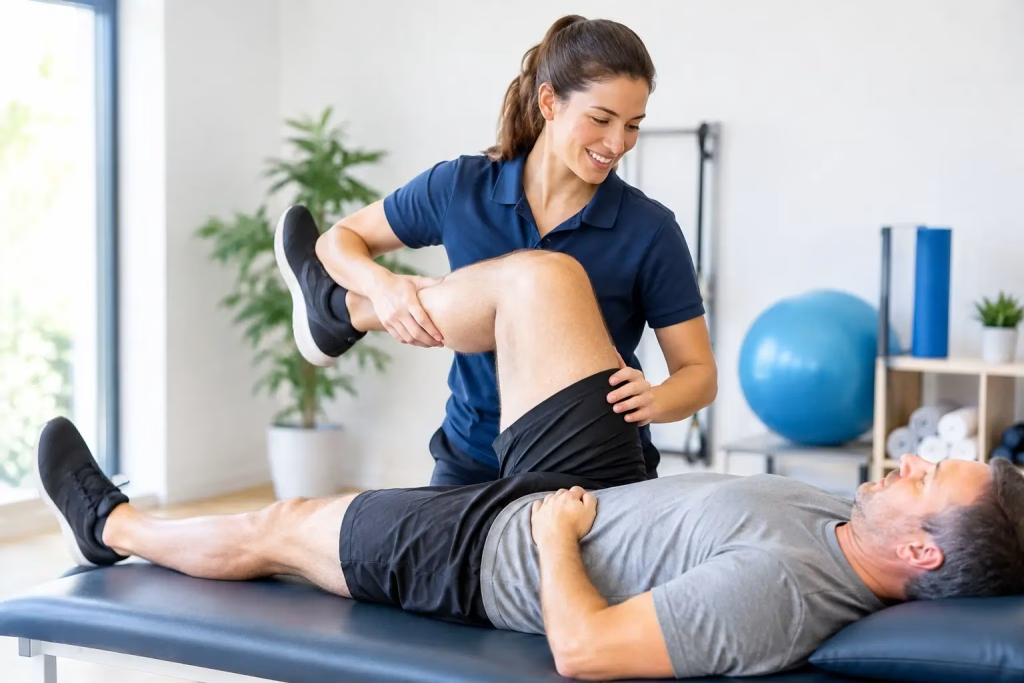
A proper first appointment is time to be heard, not an obstacle course designed to rush you into treatment. Your physiotherapist will ask when the problem began, what aggravates it, what helps, and how it affects sleep, work, exercise and daily life. They will assess relevant movement, strength and joint function, then explain their findings in plain language.
From there, treatment may include hands-on techniques, mobility work, education about managing the condition and a targeted exercise plan. The exercises should be specific enough to matter but manageable enough to complete. A plan requiring an hour every day is unlikely to help if it does not fit around your job, family and commitments.
Thirty-minute appointments allow time for treatment, progression and questions. That matters because rehabilitation changes. The first few sessions may focus on settling an irritated area and restoring comfortable movement. Later, the focus should shift towards strength, balance, loading and returning to the activities that matter to you.
At Growing Younger Physiotherapy, care is designed around this one-to-one approach for people who want to remain active and independent beyond 40. The aim is not to make you dependent on appointments. It is to give you the treatment, knowledge and physical confidence to keep moving well between visits and after your plan is complete.
When should you book a physiotherapy assessment?
You do not need to wait until a small problem becomes a major limitation. An assessment can be worthwhile if pain has lasted longer than a few days, keeps returning, stops you exercising, affects sleep, or makes you alter the way you walk, lift or use your arm.
It is particularly useful to seek advice before returning to activity after an injury. Feeling better is encouraging, but it does not always mean your strength and control have returned. A gradual plan can reduce the chance of repeatedly flaring the same knee, shoulder or lower back problem.
Some symptoms need urgent medical assessment rather than routine physiotherapy. Seek prompt medical help for severe trauma, a suspected fracture, sudden unexplained weakness, loss of bladder or bowel control, numbness around the groin, chest pain, or fever and feeling unwell alongside severe pain. A physiotherapist can also tell you when further investigation or another health professional is appropriate.
ACC and rehabilitation support
If your pain began with an accident or injury in New Zealand, ACC may partly cover physiotherapy treatment. You do not need a GP referral to begin care with an ACC-registered physiotherapy clinic, as the clinic can register an eligible ACC claim.
For certain shoulder, knee and lower back injuries, Careway Rehabilitation may provide full cover when you meet the scheme criteria. Eligibility depends on the injury and your individual circumstances, so it is worth asking at your appointment rather than assuming what is or is not available.
The habits that make treatment work better
Physiotherapy works best when appointments and everyday choices support each other. You do not need perfection. Consistent, small actions usually beat an ambitious routine that lasts one week.
Keep your prescribed exercises visible and simple. Tie them to an existing habit, such as after making your morning tea or before your evening shower. Build walking, strength work and mobility back gradually, and keep track of which activities leave you better, the same or more irritated the following day. That feedback helps your physiotherapist adjust the plan rather than guess.
It also helps to say when something is not working. If an exercise feels wrong, a flare-up lasts longer than expected, or a work demand has changed, speak up. A good plan is not rigid. It responds to your body and your life while still moving you towards a clear outcome.
The best time to address pain is often before it has persuaded you to give up the things you enjoy. With skilled guidance and a plan you can actually follow, getting older can mean staying capable, strong and ready for the life you want to keep living.
